How Crowded Rooms Shaped Kenny Rogers Before the Fame

A childhood compressed into three bedrooms In the 1940s, the Rogers family closed each night on a reality that would have tested anyone’s patience: ten people in a standard three-bedroom apartment at Houston’s San Felipe Courts federal housing project. Floyd and Lucille Rogers were raising eight children there—Leland, Billy, Sandy, Kenneth, Geralyn, Barbara, Roy, and Randy—inside rooms built for far fewer bodies, voices, and needs. For fourth-born Kenneth Ray Rogers, the future Kenny Rogers, childhood was defined not by privacy but by its total absence. Beds were shared, belongings were stacked wherever they would fit, and a shut door offered little protection from the sounds, moods, and movement of a household operating at full capacity from dawn until night. Government housing, thin walls, and no place to disappear A crowded home changes the meaning of ordinary things. One bathroom becomes a daily negotiation. A kitchen table becomes a schedule. A bedroom becomes a contested zone rather than a refuge. In low-income housing before air conditioning was common, even the weather joined the pressure. Summer heat settled into the brick building and stayed there, turning close quarters into something heavier and harder to escape. The apartment’s walls were thin in every sense that mattered. When strain entered the room, everyone felt it. When Kenny’s father came home after drinking, there was no distant corner of the house, no upstairs retreat, no backyard bedroom where a child could wait for tension to pass. The family lived inside each other’s emotional weather. When you grow up with no private space, you learn quickly that peace is not something a room gives you; it is something you try to create inside yourself. Why the middle child went quiet instead of loud In many overcrowded households, children compete for oxygen by becoming bigger versions of…

A childhood compressed into three bedrooms
In the 1940s, the Rogers family closed each night on a reality that would have tested anyone’s patience: ten people in a standard three-bedroom apartment at Houston’s San Felipe Courts federal housing project. Floyd and Lucille Rogers were raising eight children there—Leland, Billy, Sandy, Kenneth, Geralyn, Barbara, Roy, and Randy—inside rooms built for far fewer bodies, voices, and needs.
For fourth-born Kenneth Ray Rogers, the future Kenny Rogers, childhood was defined not by privacy but by its total absence. Beds were shared, belongings were stacked wherever they would fit, and a shut door offered little protection from the sounds, moods, and movement of a household operating at full capacity from dawn until night.
Government housing, thin walls, and no place to disappear
A crowded home changes the meaning of ordinary things. One bathroom becomes a daily negotiation. A kitchen table becomes a schedule. A bedroom becomes a contested zone rather than a refuge. In low-income housing before air conditioning was common, even the weather joined the pressure. Summer heat settled into the brick building and stayed there, turning close quarters into something heavier and harder to escape.
The apartment’s walls were thin in every sense that mattered. When strain entered the room, everyone felt it. When Kenny’s father came home after drinking, there was no distant corner of the house, no upstairs retreat, no backyard bedroom where a child could wait for tension to pass. The family lived inside each other’s emotional weather.
When you grow up with no private space, you learn quickly that peace is not something a room gives you; it is something you try to create inside yourself.
Why the middle child went quiet instead of loud
In many overcrowded households, children compete for oxygen by becoming bigger versions of themselves—louder, sharper, more forceful. In the Rogers apartment, that would have been an understandable response. Friction was built into the floor plan. But Kenny seems to have developed the opposite instinct.
As the middle son in a family of eight children, he learned that anger only thickened the air. Losing his temper would not win him more room, more silence, or more control. So he adapted by pulling back, studying the mood of the room, and speaking carefully. It was less surrender than strategy: a way to survive noise, avoid unnecessary conflict, and make himself small enough to endure a life that never stopped pressing in.
An interview clip in which Kenny Rogers discusses his upbringing and family background.
The education of watching and listening
That kind of childhood can sharpen a person in ways that are not obvious from the outside. A child with no private space often becomes skilled at reading faces, timing, and tone. In a crowded family, you notice who is tired, who is angry, who is joking, who needs something, and when it is smartest to say nothing at all. Those are social skills learned under pressure, not in theory.
For Kenny Rogers, that quietness was not emptiness. It was attentiveness. In a home where resources were limited and emotions could fill a room fast, watching closely was practical. Listening carefully was protective. Sharing was not an abstract virtue but a daily discipline, enforced by the simple fact that there was never enough space, time, or comfort to belong to one person alone.
What poverty teaches without announcing itself
The details of the Rogers family’s apartment speak to a broader truth about poverty in mid-century America: deprivation is often experienced less as one dramatic event than as constant compression. Too many people, too little room, too few chances to be alone. The pressure is physical, but it also shapes temperament. It can produce bravado, volatility, withdrawal, humor, discipline—or some shifting mix of all five.
In Kenny’s case, the lessons seem to have settled into habits of control and accommodation. In a home where everyone had to share what was on hand, entitlement was a luxury. Patience was practical. Sensitivity to other people’s needs was not simply kindness; it was how a crowded family kept moving. Those early conditions did not make life easier, but they helped define the emotional posture of a boy who learned to endure by staying measured.
A documentary-style overview of Kenny Rogers’s life and early years.
Before the celebrity, a boy shaped by scarcity
Later fame can make early hardship look tidy, as if childhood were merely a preface to success. But the world inside San Felipe Courts was not a neat origin story. It was a daily exercise in adaptation. Kenneth Ray Rogers was not being prepared for celebrity in those rooms. He was learning how to get through the night, how to stay alert, and how to find some version of calm without any private place to keep it.
May you like


That is what gives this beginning its force. Before the records, the television appearances, and the public persona, there was a boy in Houston with seven siblings, little personal space, and every reason to harden himself. Instead, he appears to have learned something more subtle: when a room is already crowded with stress, the person who survives best may be the one who knows how to leave space for others, even when he has almost none of his own.

Quick Facts
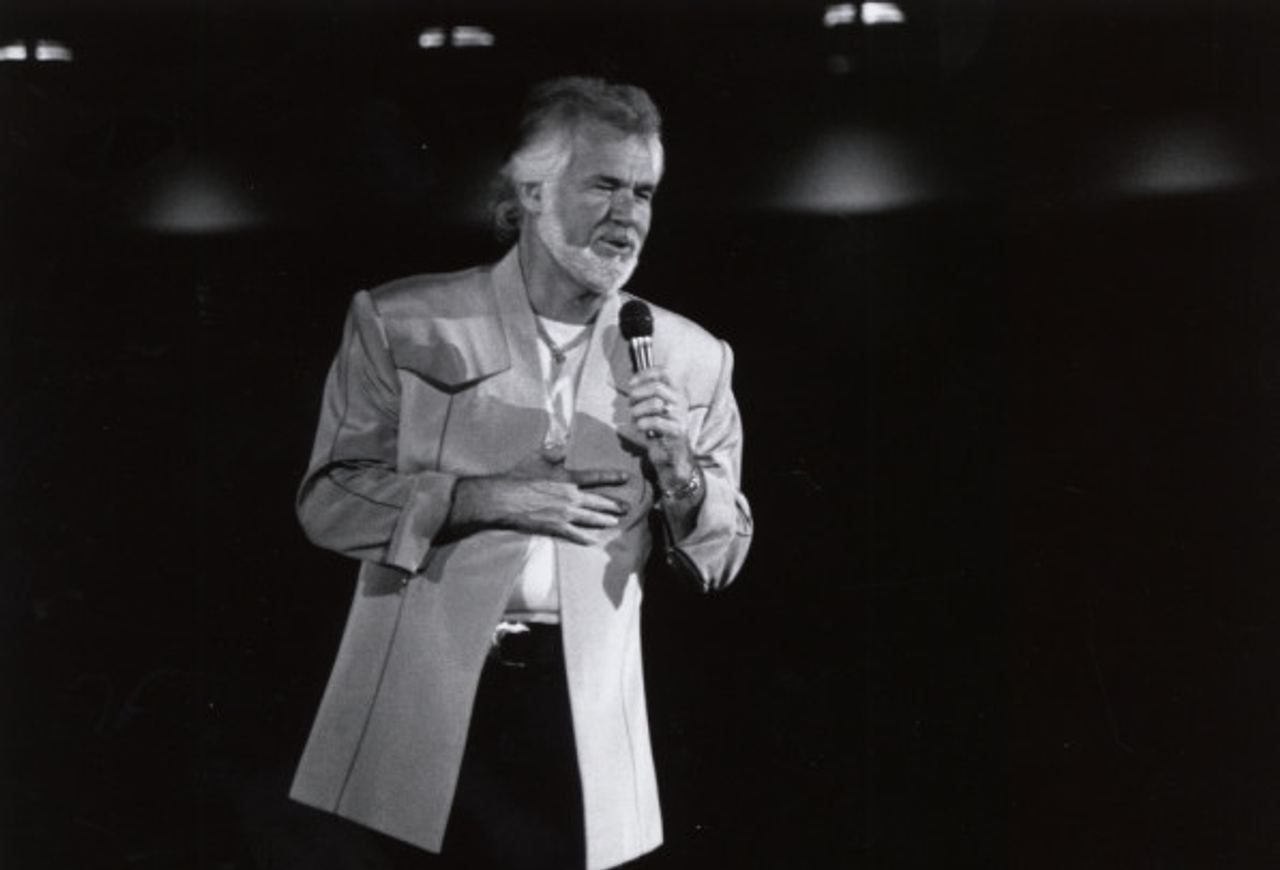
Image credits: Philpottm / Wikimedia Commons / CC BY-SA 3.0; User kw111786 on Flickr (Original version) User UCinternational (Crop) / Wikimedia Commons / CC BY-SA 2.0; University of Houston Digital Library / Wikimedia Commons / CC BY-SA 2.0.