This 110-mile Train Route Is One of North America’s Most Scenic—Climbing Past Waterfalls, Mountains, and Alpine Lakes
Ignacio Palacios/Getty Images Few railroads pack as much history into so few miles as the White Pass & Yukon Route Railway . Built at the height of the Klondike Gold Rush, the 110-mile narrow-gauge railroad links Skagway, Alaska, with Whitehorse, the capital of Canada’s Yukon Territory , climbing from sea level to the 2,885-foot White Pass summit before continuing into British Columbia. Although only portions of the original line operate for passengers today, the railroad remains one of North America’s great scenic train rides . Its story begins with the Klondike Gold Rush. After gold was discovered in the Yukon in 1896, roughly 100,000 people set out for the goldfields around Dawson City, Canada. Most of these “stampeders,” as they became known, reached the region by steamship to Skagway or nearby Dyea, Alaska, before attempting to cross the Coast Mountains via the White Pass or Chilkoot trails. The journey was notoriously brutal. Canadian officials required each prospector to carry about a year’s worth of supplies (weighing roughly one ton ) to prevent starvation, forcing stampeders to make dozens of trips over steep mountain passes before they could continue by boat down the Yukon River. Recognizing the need for a better route, investors began building the White Pass & Yukon Route Railway in May 1898. Workers blasted through solid granite, carved ledges into near-vertical mountainsides, and erected steel bridges and timber trestles across deep gorges—all while battling avalanches, harsh winters, and remote conditions. The first train reached the White Pass summit in February 1899, and by July 1900, the railroad had extended all the way to Whitehorse. What had taken stampeders days of grueling climbing could now be completed in a matter of hours. Freight service on the line largely ended in 1982 after the closure of the Faro lead-zinc mine…
Ignacio Palacios/Getty Images
Few railroads pack as much history into so few miles as the White Pass & Yukon Route Railway . Built at the height of the Klondike Gold Rush, the 110-mile narrow-gauge railroad links Skagway, Alaska, with Whitehorse, the capital of Canada’s Yukon Territory , climbing from sea level to the 2,885-foot White Pass summit before continuing into British Columbia. Although only portions of the original line operate for passengers today, the railroad remains one of North America’s great scenic train rides .
Its story begins with the Klondike Gold Rush. After gold was discovered in the Yukon in 1896, roughly 100,000 people set out for the goldfields around Dawson City, Canada. Most of these “stampeders,” as they became known, reached the region by steamship to Skagway or nearby Dyea, Alaska, before attempting to cross the Coast Mountains via the White Pass or Chilkoot trails. The journey was notoriously brutal. Canadian officials required each prospector to carry about a year’s worth of supplies (weighing roughly one ton ) to prevent starvation, forcing stampeders to make dozens of trips over steep mountain passes before they could continue by boat down the Yukon River.
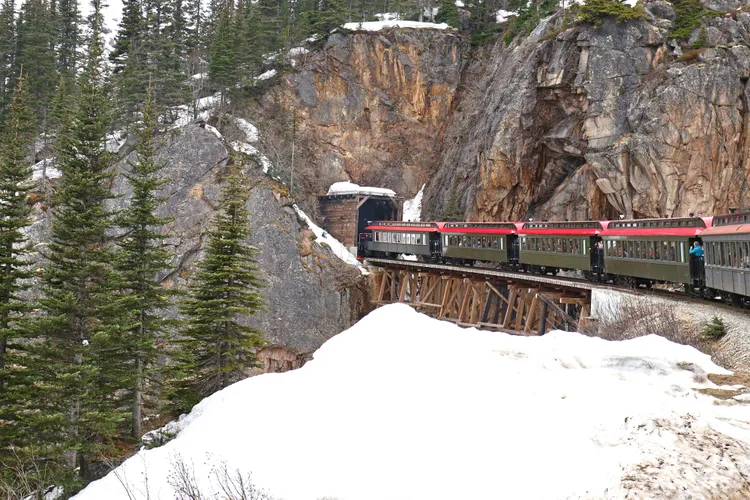
Recognizing the need for a better route, investors began building the White Pass & Yukon Route Railway in May 1898. Workers blasted through solid granite, carved ledges into near-vertical mountainsides, and erected steel bridges and timber trestles across deep gorges—all while battling avalanches, harsh winters, and remote conditions. The first train reached the White Pass summit in February 1899, and by July 1900, the railroad had extended all the way to Whitehorse. What had taken stampeders days of grueling climbing could now be completed in a matter of hours.
Freight service on the line largely ended in 1982 after the closure of the Faro lead-zinc mine in the Yukon, but the railroad was revived in 1988 as a heritage attraction. Today, the railroad’s greatest draw is the scenery, carrying hundreds of thousands of passengers each year on excursions ranging from the popular White Pass Summit trip to longer journeys into British Columbia and the Yukon, past waterfalls, soaring cantilever bridges, and traces of the Klondike Gold Rush that are inaccessible by road. However, Jaime Bricker, the tourism director for Explore Skagway and a former White Pass employee of 14 years, says first-time riders shouldn’t liken it to an amusement park ride.
“To construct this railroad, engineers and workers overcame design challenges, granite mountains, steep grades, cliff-hanging turns, and unimaginable weather conditions. And they did it all without our modern tools of today,” says Bricker, who notes White Pass is an International Historic Civil Engineering Landmark.
Here’s what you need to know before riding the White Pass & Yukon Route Railway.
Best Time to Ride
BirdImages/Getty Images
The White Pass & Yukon Route operates seasonally, generally from late April or early May through early October, with schedules tied closely to Skagway’s cruise season . While the scenery is spectacular throughout the season, each part of the year offers something a little different.
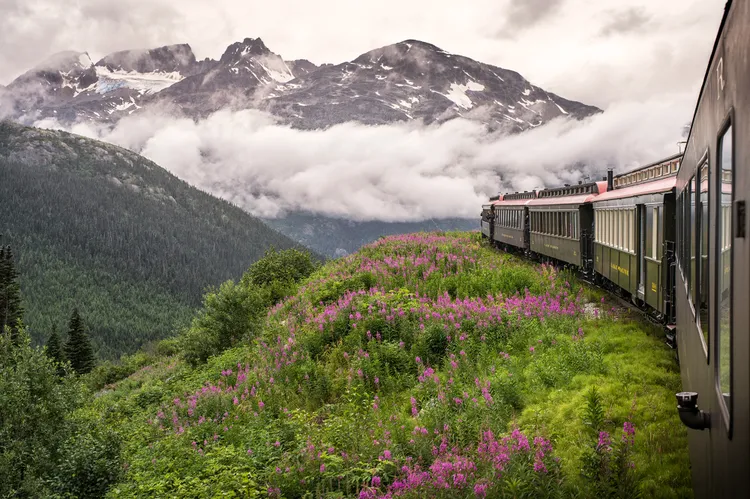
In May and early June, snow still blankets much of the terrain around White Pass, while spring runoff sends water rushing over the route’s many waterfalls. By July and August, the mountainsides have turned green, wildflowers bloom across the alpine tundra, and Skagway is at its busiest as the cruise season reaches its peak. If you’re traveling during midsummer, book tickets well in advance, especially if you have a specific departure date in mind.
September brings cooler temperatures and fewer visitors, along with patches of fall color across the alpine landscape, and Bricker notes that there are often more wildlife opportunities when the landscape is barer. Early snow sometimes returns to the highest peaks before the railway closes for the season. Multiple rides depart daily, but Jacqui Taylor-Rose, who leads product development at the railway, recommends late-afternoon timings.
“The light is pretty for photos toward the end of the day during peak season,” says Taylor-Rose. “As you travel up and down the pass, the direction of travel opens different vistas and perspectives. Travel in either direction is impressive.” Whenever you ride, come prepared for changing weather. Temperatures at the summit are often significantly cooler than they are in Skagway, so a light jacket or rain layer is worth packing, even if the forecast calls for sunshine.
Know Before You Go
Brycia L. James/Getty Images
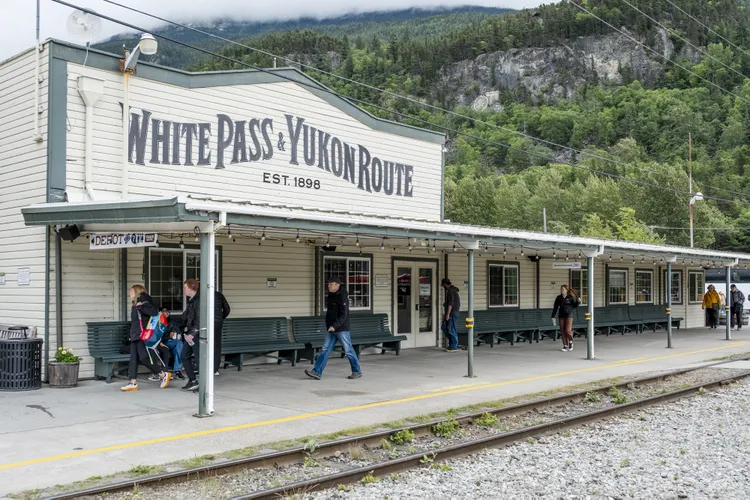
The White Pass & Yukon Route departs from the historic depot in downtown Skagway, an easy walk from both the cruise docks and most hotels in town. While many passengers ride as part of a cruise shore excursion , independent travelers can book directly through the railway, often with access to a wider selection of departure times and itineraries since they aren’t working around a ship’s schedule.
The railway offers several different excursions, ranging from the roughly three-hour White Pass Summit Excursion (which follows the historic route to the White Pass summit before returning to Skagway) to longer journeys that continue into British Columbia and the Yukon. Some excursions return by train, while others combine rail travel with a motor coach ride over the Klondike Highway. If you’re booking independently, pay close attention to the itinerary. Any excursion that crosses into Canada requires a passport, even if you return to Alaska the same day. Vintage diesel locomotives pull most excursions, but on select departures, passengers can ride behind the restored 1947 steam locomotive No. 73.
Seating is generally assigned, but passengers are free to step onto the outdoor viewing platforms between railcars when the train is moving. Those platforms offer some of the best opportunities for photography, though they can become crowded at popular viewpoints. Chris Williams, a conductor on the route, says not to worry about where you’re sitting.
“All the summit excursions use a large loop track to get turned around at the top. If you go up on one side, you’ll come down on the other,” he says.
Food service is limited, so it’s worth eating beforehand or bringing a light snack and water, particularly on longer Yukon itineraries.
If you want to learn about the area’s gold-mining history, Taylor-Rose recommends stopping by the Klondike Gold Rush National Historic Park headquarters, operated by the National Park Service at the old White Pass Depot on the corner of Second and Broadway.
“There are amazing displays to further your knowledge of the gold rush, plus you can take in a film or wander the collection of historic buildings along Broadway maintained by the park,” she says.
Views Along the Route
Getty Images
If you’re riding the White Pass Summit Excursion, the journey is all about the scenery outside the window. The train doesn’t make sightseeing stops before turning around at the summit, but the route packs in a remarkable number of landmarks over its roughly 40-mile round trip.
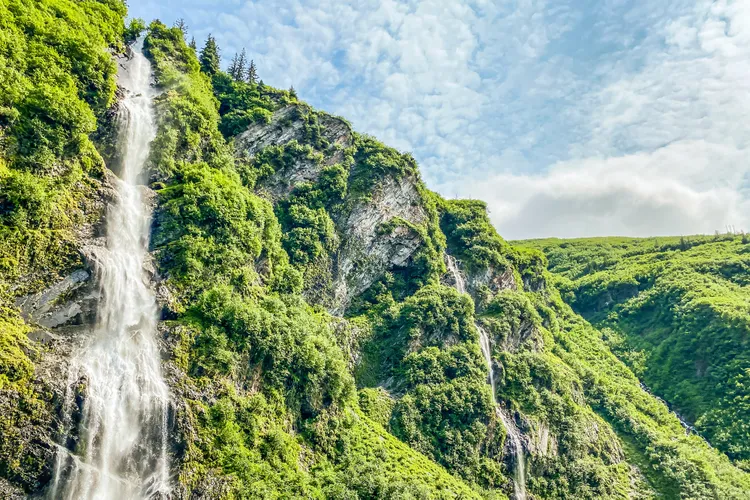
After leaving Skagway, the railroad immediately begins climbing into the Coast Mountains, tracing the route once used by Klondike Gold Rush prospectors. Before long, the train passes Bridal Veil Falls, where water spills down a granite cliff beside the tracks, followed by Inspiration Point, a dramatic overlook that offers sweeping views back toward Skagway and the Taiya Inlet.
“For a brief period, the mountain valley will part behind you, and guests have an unobstructed view (weather permitting) all the way back down to the Skagway bay, with the Chilkat Mountains above Haines for a far backdrop,” says Williams.
Farther up the line is Dead Horse Gulch , named for the thousands of pack animals that died along the White Pass Trail during the Gold Rush as prospectors struggled to carry the supplies required to enter Canada. As the train gains elevation, dense coastal forest gradually gives way to alpine tundra, glacial lakes, rocky peaks, and, early in the season, lingering snowfields before reaching the White Pass Summit at 2,885 feet. Just past here, the rail reverses course and returns to Skagway.
May you like
Several longer excursions continue beyond the summit into Canada, revealing a landscape many visitors to Southeast Alaska never see and allowing time to step off the train and explore places that played an important role in Klondike history. The Bennett Scenic Journey continues to Bennett, British Columbia, once one of the Klondike Gold Rush’s busiest boomtowns. Before the railroad was completed, stampeders built boats here to continue their journey down the Yukon River toward Dawson City. Today, little remains beyond a handful of historic buildings, including the restored St. Andrew’s Presbyterian Church and the original 1901 railway station, but the setting along the shores of Bennett Lake offers a striking glimpse into the region’s gold rush past. There’s about a 45-minute layover, and passengers can walk around the Gold Rush townsite and explore the nearby lakeshore.
“The stop at Lake Bennett is only accessible by hiking the Chilkoot Trail or taking the train,” adds Taylor-Rose. “The views down the lake are unmatched, and the history of the region is fascinating.”
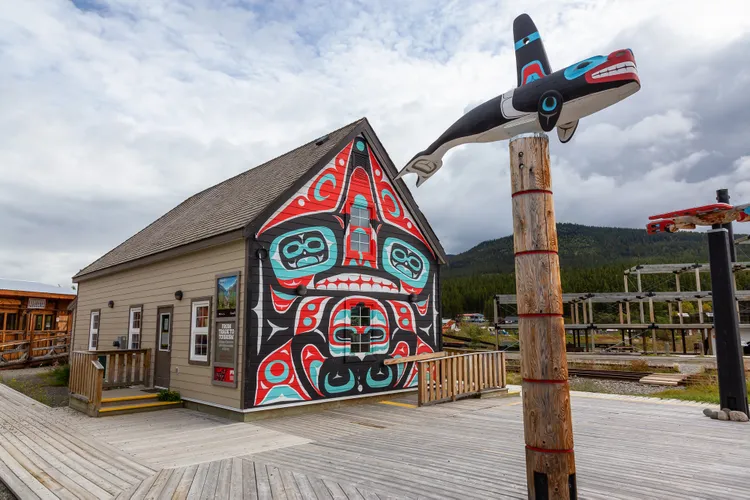
The railway’s Carcross excursions continue even farther into the southern Yukon. After passing Bennett Lake and winding through increasingly broad valleys, the train arrives in Carcross, Canada, one of the Yukon Territory’s oldest communities. Originally known as Caribou Crossing, the town sits where Bennett and Nares lakes meet and is home to the Carcross/Tagish First Nation . Visitors can stroll a compact downtown filled with restored Gold Rush-era buildings, Indigenous-owned galleries, and local shops before returning to Skagway by motor coach. The drive back follows the Klondike Highway, offering a different perspective on the same mountain landscapes crossed by rail.