Dolly Parton Secretly Married Carl Dean After Her Label Asked Her to Wait — Inside Their Nearly 60-Year Love Story
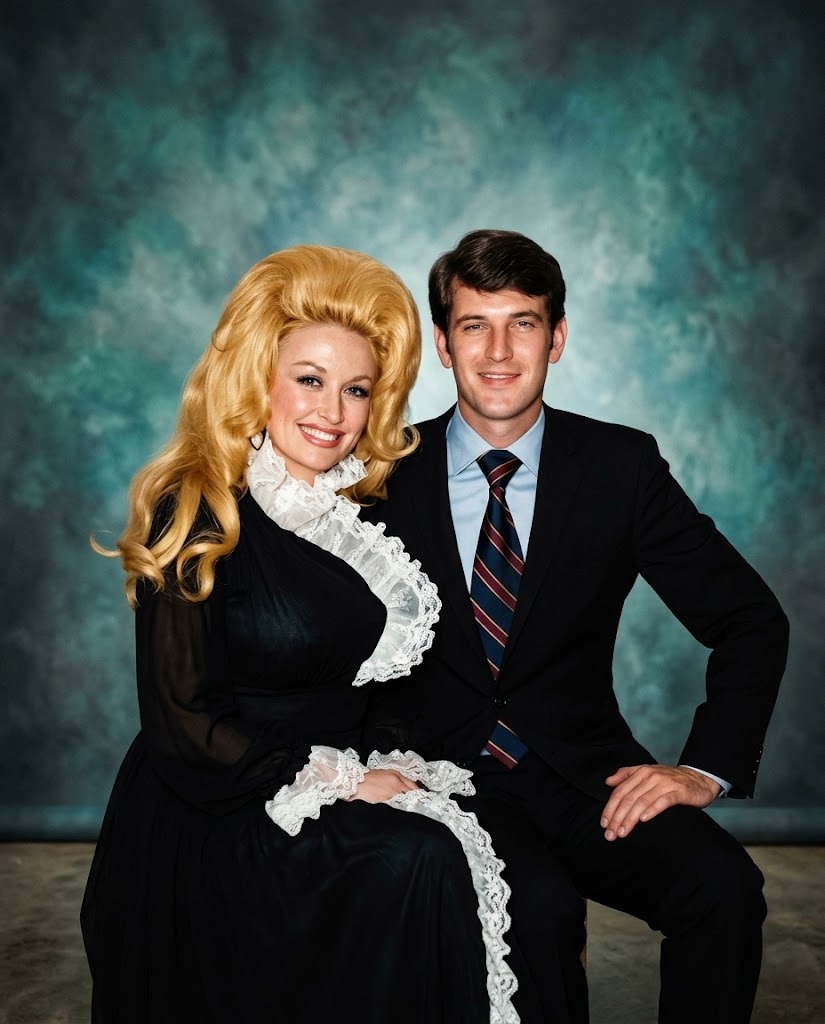
In 1964, Dolly Parton arrived in Nashville determined to build a career as a songwriter and singer. On her first day in town, she met Carl Dean outside the Wishy Washy Laundromat. Two years later, as her recording career was beginning to take shape, people at Monument Records asked her to postpone marriage for a year. Parton chose a different path: she quietly married Dean in Georgia on May 30, 1966, while continuing to pursue the career that would make her one of country music’s most enduring figures. The story is sometimes reduced to a dramatic choice between love and ambition. Parton’s own recollections suggest something more nuanced. Fred Foster and others at Monument Records had invested in her career and wanted her to wait before marrying. She understood their concern, but she and Dean went ahead with a private ceremony anyway. A chance meeting on Dolly Parton’s first day in Nashville Parton was 18 when she moved to Nashville in 1964. She later recalled meeting Dean almost immediately, outside the Wishy Washy Laundromat. He was driving a white Chevrolet when he noticed her, and a brief conversation grew into a relationship that would last for the rest of his life. The contrast between them became one of the defining features of their marriage. Parton was drawn to stages, studios and audiences. Dean preferred a private life far from the entertainment industry. Rather than forcing one another into the same world, they allowed those differences to remain. What her record label actually asked her to do As Parton’s career gained momentum, Monument Records asked her to delay marriage for about a year. Parton later explained that the label had spent money developing her career and worried that an early marriage might complicate those plans. That is different from the more…
In 1964, Dolly Parton arrived in Nashville determined to build a career as a songwriter and singer. On her first day in town, she met Carl Dean outside the Wishy Washy Laundromat. Two years later, as her recording career was beginning to take shape, people at Monument Records asked her to postpone marriage for a year. Parton chose a different path: she quietly married Dean in Georgia on May 30, 1966, while continuing to pursue the career that would make her one of country music’s most enduring figures.
The story is sometimes reduced to a dramatic choice between love and ambition. Parton’s own recollections suggest something more nuanced. Fred Foster and others at Monument Records had invested in her career and wanted her to wait before marrying. She understood their concern, but she and Dean went ahead with a private ceremony anyway.
A chance meeting on Dolly Parton’s first day in Nashville
Parton was 18 when she moved to Nashville in 1964. She later recalled meeting Dean almost immediately, outside the Wishy Washy Laundromat. He was driving a white Chevrolet when he noticed her, and a brief conversation grew into a relationship that would last for the rest of his life.
The contrast between them became one of the defining features of their marriage. Parton was drawn to stages, studios and audiences. Dean preferred a private life far from the entertainment industry. Rather than forcing one another into the same world, they allowed those differences to remain.
What her record label actually asked her to do
As Parton’s career gained momentum, Monument Records asked her to delay marriage for about a year. Parton later explained that the label had spent money developing her career and worried that an early marriage might complicate those plans.
That is different from the more sensational version of the story in which executives supposedly forced her to choose between Dean and music. The documented accounts support the idea that she was asked to wait, not that she was ordered to abandon one life for the other.
Parton and Dean decided to marry quietly in Ringgold, Georgia, away from the attention that a Tennessee wedding might have attracted.
The secret Georgia wedding
Dolly Parton and Carl Dean married on May 30, 1966, in Ringgold. Parton’s mother, Avie Lee, accompanied them. Parton later said she wanted a church wedding rather than simply signing papers at a courthouse, so they found a Baptist church and were married by a minister.
There was no celebrity guest list and no publicity campaign. The small ceremony set the tone for a marriage that remained intensely private even as Parton’s fame expanded around the world.
Marriage did not interrupt her ambitions. In the years that followed, she became a major songwriter and recording artist, joined The Porter Wagoner Show, crossed over to pop audiences, acted in films and built businesses and philanthropic projects that reached far beyond Nashville.
Carl Dean chose life outside the spotlight
Dean’s absence from red carpets eventually became almost as famous as Parton’s public presence. He attended an industry event early in their marriage but never embraced the celebrity circuit. Parton repeatedly explained that he simply did not enjoy that part of show business.
Dean worked in the asphalt-paving business and kept his daily life separate from the machinery of fame surrounding his wife. Parton described him as supportive, but comfortable doing that from home rather than from backstage or awards shows.
The arrangement gave them two different worlds to return to. Parton could spend long stretches working in studios, on film sets or on tour, while Dean remained grounded in a quieter routine. Their time together did not have to revolve around celebrity.
Why their differences may have helped the marriage
Parton often credited humor, independence and time apart with helping the relationship endure. The couple did not try to turn their marriage into a public brand. Dean did not have to become a celebrity spouse, and Parton did not have to reduce her ambitions to match his preference for privacy.
They also enjoyed ordinary routines far removed from the glamorous image associated with her career, including road trips, picnics and private time together. Their marriage stayed deliberately less theatrical than her public persona.
Carl Dean’s influence still entered Dolly Parton’s music
Although Dean avoided show business, pieces of their life together found their way into Parton’s music. One well-known example is “Jolene.” Parton said the name came from a young fan, while the jealousy in the song was inspired in part by a bank teller who paid noticeable attention to Dean.
Decades later, Dean’s love of rock music also helped inspire Parton’s turn toward that genre for her 2023 album Rockstar. His influence could be present in her creative work even when he stayed away from the spotlight.
Fifty years later, they did the wedding again
In 2016, Parton and Dean marked their 50th wedding anniversary by renewing their vows. The celebration gave Parton a chance to enjoy some of the wedding pageantry she had skipped in 1966 while still keeping the focus on a relationship that had always belonged primarily to the two of them.
Carl Dean’s death and Dolly’s musical farewell
Carl Dean died in Nashville on March 3, 2025, at age 82. He and Parton had been married for nearly 59 years. His family held a private service, in keeping with the way he had lived.
Days later, Parton released “If You Hadn’t Been There,” a song dedicated to Dean. The tribute brought a famously private relationship into her music without undoing the privacy he had protected for decades.
May you like

A final chapter in 2026
Dolly Parton died peacefully in Nashville on August 25, 2026, at age 80. The following day, her team announced that the many projects she had been developing would continue under the people she had selected to carry them forward. Her death came less than a year and a half after Dean’s.
Seen in full, the Parton–Dean story is not simply about choosing love over a career. Parton married the man she wanted to marry, continued pursuing the career she had moved to Nashville to build, and protected a private life that operated by different rules from her public one.
The young woman who met Dean outside a Nashville laundromat became one of the most recognizable figures in popular music. The man she met there remained almost entirely outside public view. For nearly six decades, both choices coexisted.