When Ben Haggard was six years old, he found a Fender Telecaster Deluxe stored in a closet at the family home and carried it to his father. The boy did not know the guitar’s history. He only knew that he wanted it. Merle Haggard had just returned from the road when Ben asked if the instrument could be his. Merle said yes. The Telecaster had belonged to Roy Nichols, the guitarist whose sharp, fluid playing helped shape Merle’s greatest records. For more than twenty years, Nichols stood inside the Strangers and supplied the electric lines running through songs such as “Mama Tried,” “Working Man Blues” and “The Bottle Let Me Down.” Merle later called him the finest guitarist he had ever known closely. None of that weight meant anything to the six-year-old carrying the instrument away. Ben began teaching himself. He played privately for years, often in the garage, until his mother Theresa heard enough through the walls to tell Merle he ought to listen. By fifteen, Ben’s playing had moved from the garage into his father’s band. Merle did not describe the decision as a favor to his youngest son. He said Ben was already playing better than some professionals. The teenager finished high school early and began traveling with the Strangers, doing schoolwork while learning the timing of a road band whose members had been performing together longer than he had been alive. At seventeen, Ben was playing on Merle’s records. His father compared the boy’s instincts to Roy Nichols, Grady Martin, Reggie Young and James Burton—men whose guitar work had defined entire periods of American music. Merle also admitted that watching Ben play was “knockin’ his old daddy plum out.” This was late fatherhood for Merle. He was fifty-five when Ben was born and had already lived through prison, fame, four marriages and decades of touring. In 2003, with Ben still a child and his daughter Jenessa entering her teens, Merle called the family a second chance at being a father. The guitar from the closet followed that second chance onto the road. By Merle’s final years, Ben was standing only a few feet away, playing the lead lines once carried by the older men his father revered. After Merle died in 2016, Ben continued performing those songs with members of the Strangers.
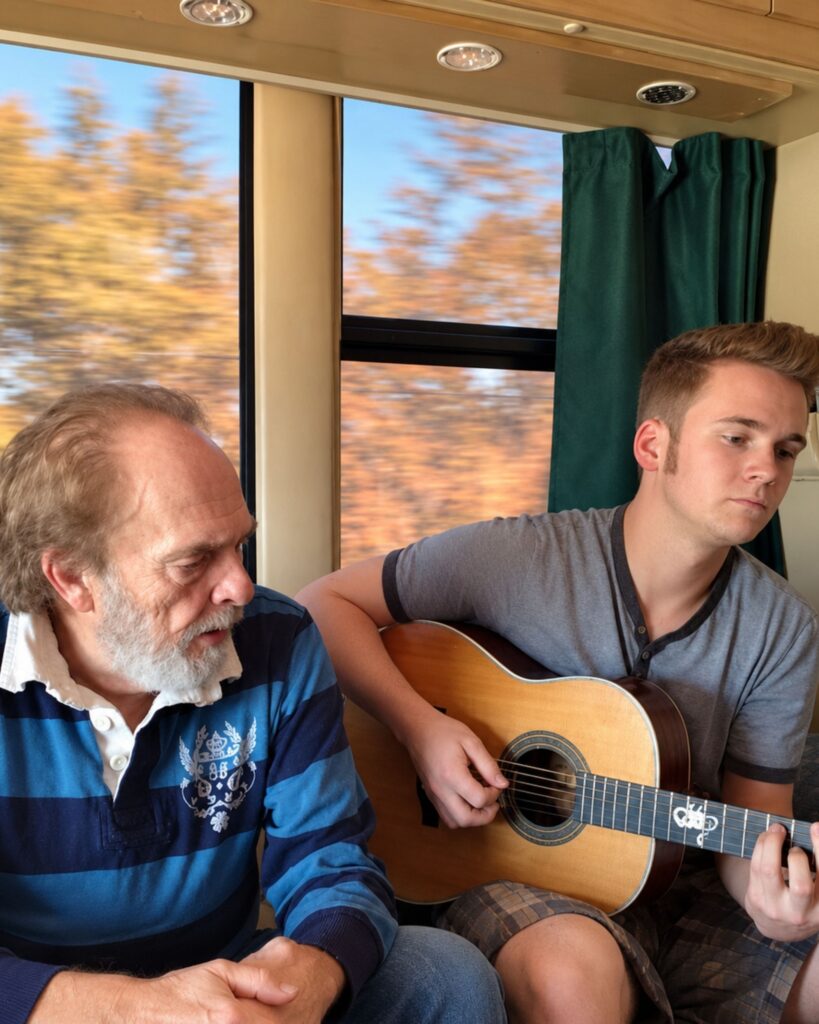
THE GUITAR MERLE HAGGARD LET HIS YOUNGEST SON KEEP An Instrument in the Closet The guitar was not displayed beneath glass. It rested in a closet at the Haggard home, out of reach of an audience and separated from the history attached to it. Ben Haggard was about six when he found it. It was a 1970s Fender Telecaster Deluxe. To a child, that was less important than the simple fact that it was there and could be held. Ben carried it to his father, who had just come home from touring, and asked whether he could have it. Merle agreed without turning the moment into a lesson about musical inheritance. Only later did Ben understand what he had been given. The Telecaster had belonged to Roy Nichols. The Man Behind Merle’s Guitar Sound Roy Nichols joined Merle’s newly formed Strangers in 1965 after leaving Wynn Stewart’s band and accepting a substantial cut in weekly pay. Nichols had already spent years playing with the Maddox Brothers and Rose, Lefty Frizzell and other West Coast country acts. His guitar did not decorate a song; it moved inside the vocal, answering Merle’s phrases with clipped notes, bends and runs that sounded both precise and slightly dangerous. Merle regarded Nichols as essential to his career. He credited Roy with setting the musical pace during the period when his records established the Bakersfield sound far beyond California. Health problems forced Nichols off the road in the late 1980s. A later stroke took the use of his left hand. By the time Ben found the Telecaster, it had already carried part of a musical language that could no longer be played by the man who created it. The child receiving the guitar did not know he was touching that history. This may have been why…
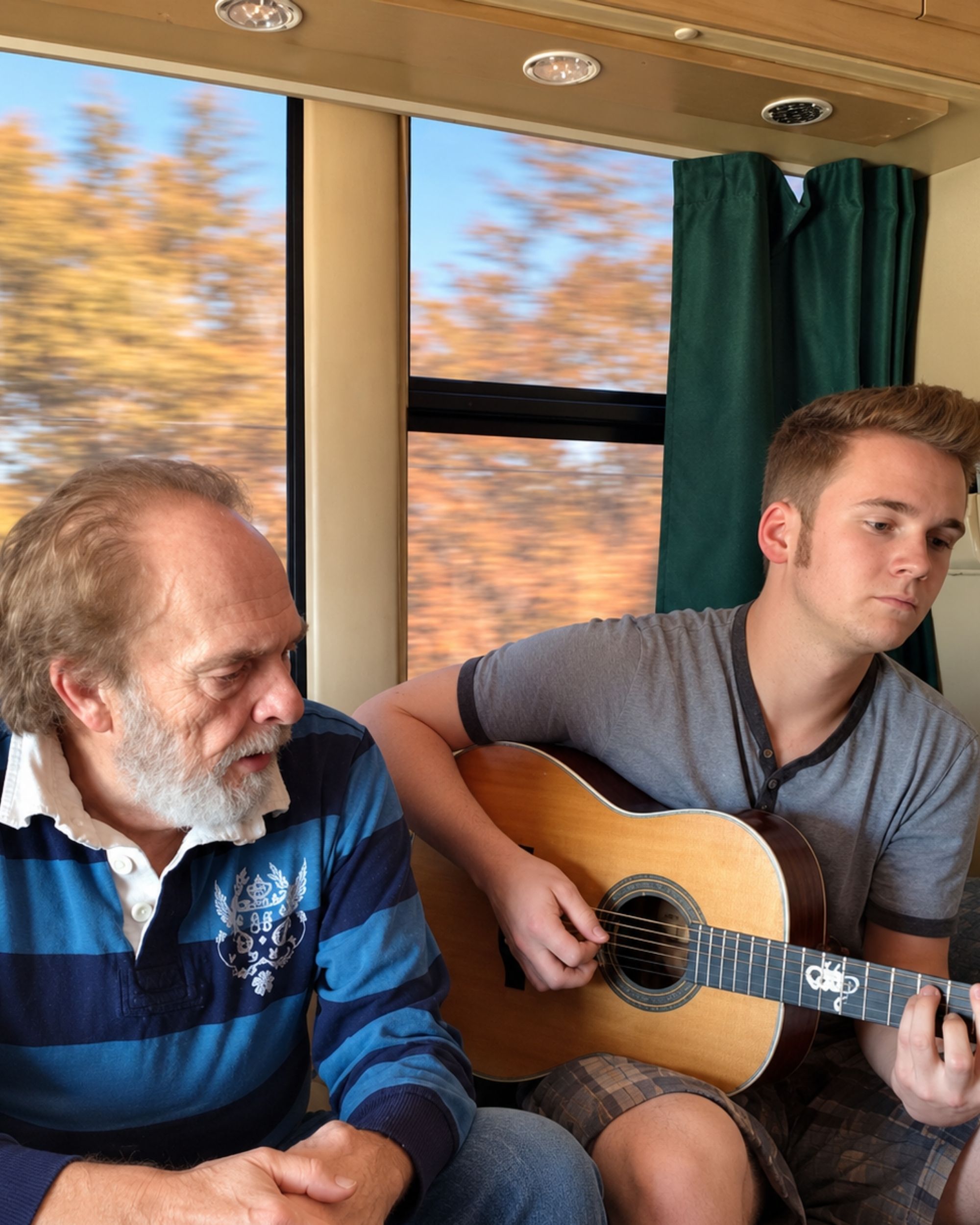
THE GUITAR MERLE HAGGARD LET HIS YOUNGEST SON KEEP
An Instrument in the Closet
The guitar was not displayed beneath glass.
It rested in a closet at the Haggard home, out of reach of an audience and separated from the history attached to it. Ben Haggard was about six when he found it.
It was a 1970s Fender Telecaster Deluxe. To a child, that was less important than the simple fact that it was there and could be held.
Ben carried it to his father, who had just come home from touring, and asked whether he could have it. Merle agreed without turning the moment into a lesson about musical inheritance.
Only later did Ben understand what he had been given.
The Telecaster had belonged to Roy Nichols.
The Man Behind Merle’s Guitar Sound
Roy Nichols joined Merle’s newly formed Strangers in 1965 after leaving Wynn Stewart’s band and accepting a substantial cut in weekly pay.
Nichols had already spent years playing with the Maddox Brothers and Rose, Lefty Frizzell and other West Coast country acts. His guitar did not decorate a song; it moved inside the vocal, answering Merle’s phrases with clipped notes, bends and runs that sounded both precise and slightly dangerous.
Merle regarded Nichols as essential to his career. He credited Roy with setting the musical pace during the period when his records established the Bakersfield sound far beyond California.
Health problems forced Nichols off the road in the late 1980s. A later stroke took the use of his left hand. By the time Ben found the Telecaster, it had already carried part of a musical language that could no longer be played by the man who created it.
The child receiving the guitar did not know he was touching that history. This may have been why he could approach it freely.
What Theresa Heard in the Garage
Merle did not sit Ben down for formal guitar lessons.
Ben worked things out himself. He listened, watched and played away from the main rooms of the house. As a teenager, he spent time with the guitar in the garage, where Theresa Lane Haggard eventually heard enough to interrupt the privacy.
She told Merle that he needed to listen to their son.
Ben later joked that his mother had noticed a few things beginning to sound right. Her intervention moved him from the garage toward the musicians surrounding his father.
Merle had spent his life among extraordinary guitar players. Compliments from him were unlikely to come simply because Ben was his child. The boy entered a house full of exacting ears.
What they heard was not imitation alone. Ben had timing.
Fifteen Years Old in the Strangers
Merle brought Ben into the band when he was fifteen.
The age echoed the early lives of musicians Merle admired. Roy Nichols had been working professionally before his sixteenth birthday. James Burton was still a teenager when his guitar began appearing on major records.
Ben’s opportunity, however, carried a complication those men had not faced. He was not merely a gifted young player. He was Merle Haggard’s son, entering Merle Haggard’s band.
Every mistake could be dismissed as proof of favoritism. Every successful solo could be credited to the name printed on his birth certificate.
Merle answered that problem by speaking about ability. Ben, he said, was already playing better than professional musicians on the road. He had also completed school early enough to travel, though during his first years with the Strangers he continued balancing education with performance.
The other players did not need a speech about accepting him. Ben had to meet them inside the song.
Merle’s Second House of Children
Ben belonged to a later chapter of Merle’s family life.
Merle already had four children from his first marriage and had passed through several unstable relationships before building a home with Theresa Lane. Their daughter Jenessa was born in 1989; Ben followed in 1992. Merle and Theresa married in 1993.
He was fifty-five when his youngest son arrived.
At a Smithsonian event in 2003, Merle spoke openly about being grateful for a second chance at fatherhood. Jenessa was thirteen and Ben was ten. The remark carried more weight than a simple celebration of having young children at home.
Much of Merle’s first adulthood had been consumed by confinement, ambition, touring and personal disorder. His older children had known versions of him that were frequently absent or unsettled. With Jenessa and Ben, age did not erase those years, but it gave him another household in which to behave differently.
The Telecaster appeared inside that household—not as a museum piece from the famous father’s career, but as something a boy could ask to keep.
“Knockin’ His Old Daddy Plum Out”
By seventeen, Ben was a full-time presence in the Strangers and playing on Merle’s album I Am What I Am .
Merle spoke about him with the amazement of a musician as much as the pride of a parent. He heard traces of Grady Martin and Roy Nichols, sometimes Reggie Young or James Burton. The comparisons covered several generations of elite guitar playing.
James Burton reportedly heard something familiar as well, saying Ben reminded him of himself at that age.
Merle’s delight was not carefully hidden. Ben was, he said, “knockin’ his old daddy plum out.”
The remark reveals the direction of influence. The father had supplied the house, the instrument and access to the band. The son was now giving something back: surprise.
A Position Near the End
As Merle’s health declined, Ben’s position onstage became increasingly practical.
He knew the arrangements, the band and the subtle changes his father might make inside a familiar song. He could follow without crowding him. When Merle needed the music to hold steady, his youngest son was close enough to help carry it.
Ben did not present himself as the replacement for Roy Nichols, nor could anyone occupy that exact place. Instead, the old Telecaster formed a physical connection between two relationships in Merle’s life: the guitarist who helped create his sound and the son who helped him sustain it late in life.
The instrument’s history had become useful again.
What Merle and Ben Haggard Really Leave Behind
Famous musicians often give their children expensive instruments. The gift can feel ceremonial—a polished object announcing a family tradition before the child has chosen it.
Ben chose first.
He opened a closet, found a guitar and asked his father whether he could have it. Merle did not deliver a lecture about Roy Nichols or protect the Telecaster from fingerprints. He placed the instrument within the reach of a six-year-old.
May you like


The meaning arrived slowly. Ben learned to play, Theresa called Merle into the garage, and the boy eventually took his place among the Strangers. By then, the guitar was no longer merely Roy’s old Fender or Merle’s keepsake. It had acquired another working life.
After Merle died, Ben continued performing with musicians who had stood beside his father. He could reproduce the familiar turns without pretending the songs belonged solely to him.
The six-year-old had once carried an instrument out of a closet.
Years later, he stood onstage carrying something no closet could have contained.
Video