White Sands Footprints Show Ice Age Humans Faced Abrupt Environmental Shifts During Early Settlement Of The Americas
W hite Sands, New Mexico, contains the oldest strong evidence of a human presence in the Americas. Now, new research shows the area underwent major fluctuations in water availability and temperature during the Ice Age, providing tantalizing hints of the shifting conditions these ancient settlers might have faced. The journey from Asia to North America is one of the most astounding feats of human prehistory, to the point where there is still extensive debate as to how exactly it was achieved . For a long time, it was presumed that humans first made it to the new world some 13,000 to 14,000 years ago, when an overland route across what is now the Bering Strait is thought to have opened up. But the findings at White Sands, along with other recent discoveries , have shifted the consensus towards earlier arrivals, perhaps even earlier than 20,000 years ago. These intrepid explorers would have had to take a coastal route, potentially even travelling by sea. Once they arrived, these settlers may have thought the hard part was over, finding a vast continent with an abundance of food and fresh water spread before them. However, it wouldn't have done for their descendants to get too comfortable, new research reveals, as benign local conditions could change quickly to something far more hostile. Footprints In time As stated, the White Sands footprints are the oldest evidence of human presence in the Americas (if you ignore one highly controversial site ), with some having been dated to more than 21,000 years old . Moreover, these aren't a single set of prints, all made at once. Instead, 20 layers have been unearthed from periods when conditions favored preservation, many of which capture distinctively human marks. In addition to providing evidence of a human presence, these layers, called…
W hite Sands, New Mexico, contains the oldest strong evidence of a human presence in the Americas. Now, new research shows the area underwent major fluctuations in water availability and temperature during the Ice Age, providing tantalizing hints of the shifting conditions these ancient settlers might have faced.
The journey from Asia to North America is one of the most astounding feats of human prehistory, to the point where there is still extensive debate as to how exactly it was achieved . For a long time, it was presumed that humans first made it to the new world some 13,000 to 14,000 years ago, when an overland route across what is now the Bering Strait is thought to have opened up.
But the findings at White Sands, along with other recent discoveries , have shifted the consensus towards earlier arrivals, perhaps even earlier than 20,000 years ago. These intrepid explorers would have had to take a coastal route, potentially even travelling by sea.
Once they arrived, these settlers may have thought the hard part was over, finding a vast continent with an abundance of food and fresh water spread before them. However, it wouldn't have done for their descendants to get too comfortable, new research reveals, as benign local conditions could change quickly to something far more hostile.
Footprints In time
As stated, the White Sands footprints are the oldest evidence of human presence in the Americas (if you ignore one highly controversial site ), with some having been dated to more than 21,000 years old . Moreover, these aren't a single set of prints, all made at once. Instead, 20 layers have been unearthed from periods when conditions favored preservation, many of which capture distinctively human marks.
In addition to providing evidence of a human presence, these layers, called "stratigraphic horizons" by researchers, provide us with an excellent proxy climate record – the best record of this era's climate outside of what can be deduced from ice cores at the poles.
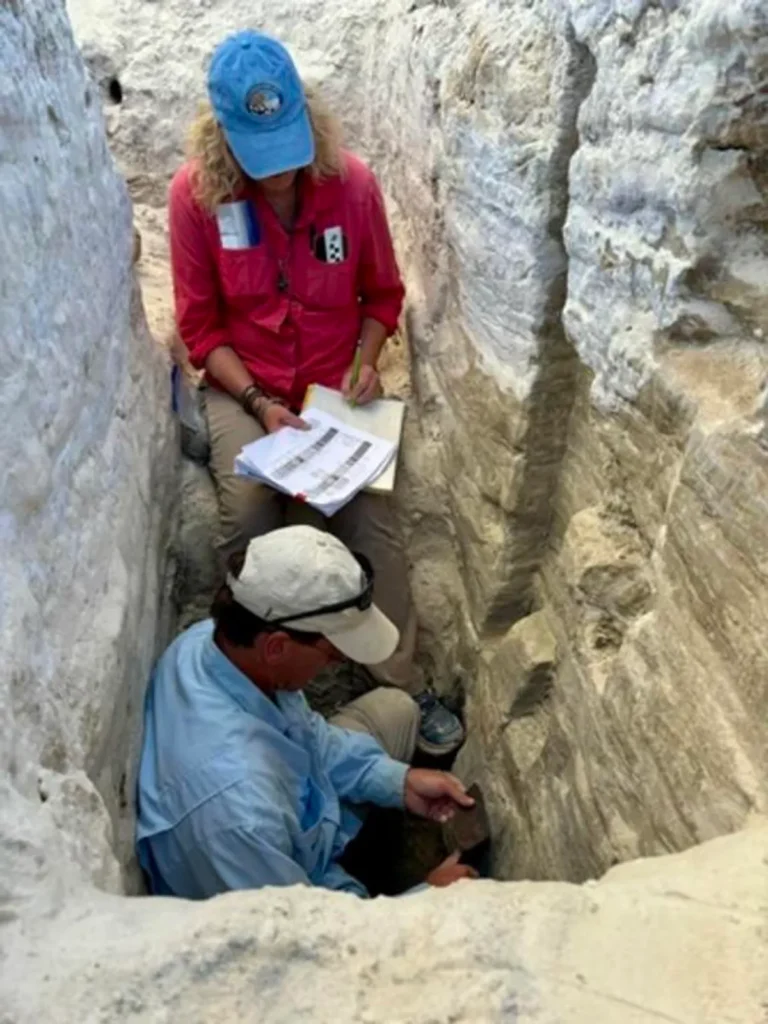
In the hope of gaining more precise climate measurements, University of Arizona Professor Jessica Tierney and her colleagues carbon-dated tens of thousands of pollen grains from the foot-print studded layers at White Sands. These measurements place the layers between 23,500 and 21,700 years old, slightly refining previous estimates for their age.
The dates fall during the Last Glacial Maximum, when the Ice Age was at its iciest, with extreme cold extending much closer to the equator. Temperatures at White Sands would have been about 6°C (10°F) cooler than today, yet even within this extreme period, the results suggest major variations in the conditions the footprint-makers would have experienced.
"The White Sands sediments are unique in that they allow us to reconstruct environmental conditions during the last ice age at a very high temporal resolution, so that we can see fluctuations that were relevant for the humans present at that time," Tierney said in a statement .
Shifting sands
Tierney and co-authors analyzed changes to the pollen in blocks of around 50 years to estimate the temperature and rainfall of the White Sands area around the time the footprints were made.
Among other findings, the decline in pollen from the aquatic Ruppia plant indicates the drying up of Lake Otero, a massive body of water that covered most of what is now White Sand National Park 24,000 years ago.
During a period of sudden warming 23,200 years ago, water became much scarcer, and the lake saltier. Meanwhile, conifer forests turned to sagebrush and oak steppe. This period would have been relatively brief, before the lake returned for millennia.
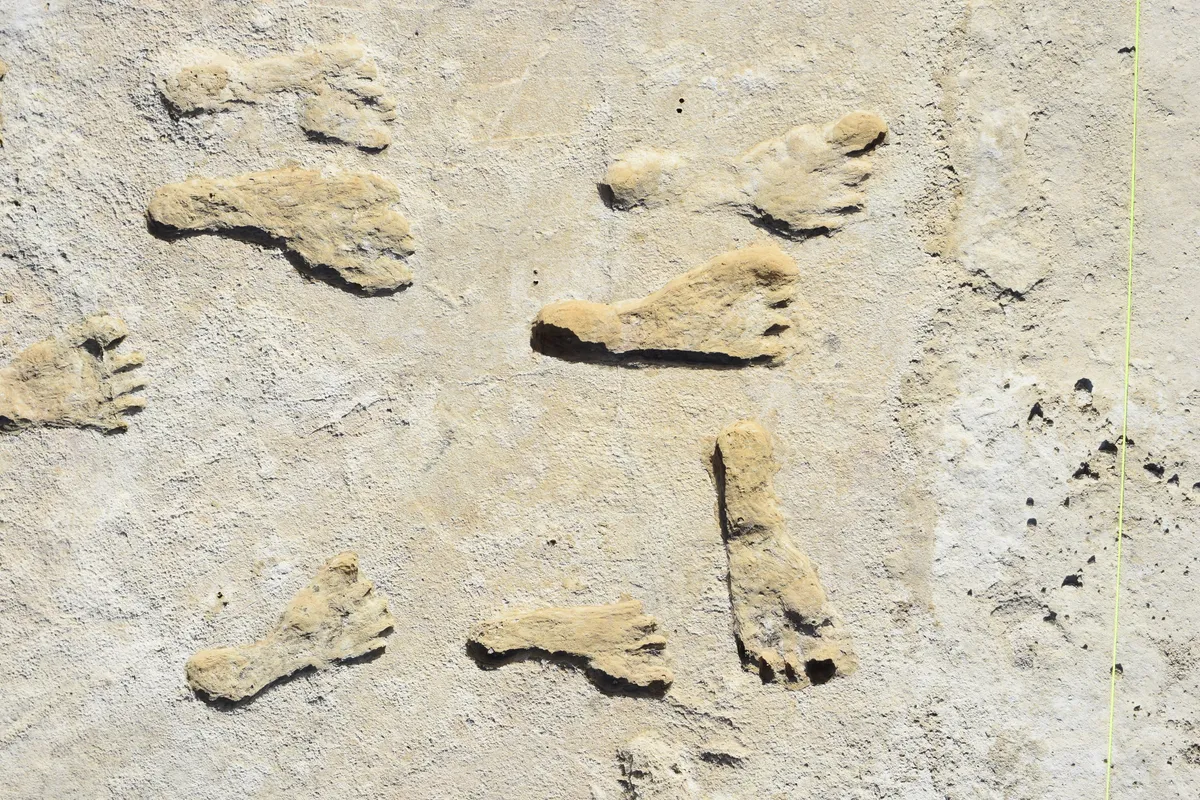
"This tells us that local changes in aridity at White Sands were quite large and followed global climate shifts," Tierney said.
"Eventually the lake shrank more and more until it gave way to a flat playa," Tierney said. "And throughout that whole sequence, people were walking there, leaving their tracks alongside those of mammoths, giant sloths and dire wolves." The authors note that the continued human presence “Is a testament to the importance of the vital resources that were available there.”
Global significance
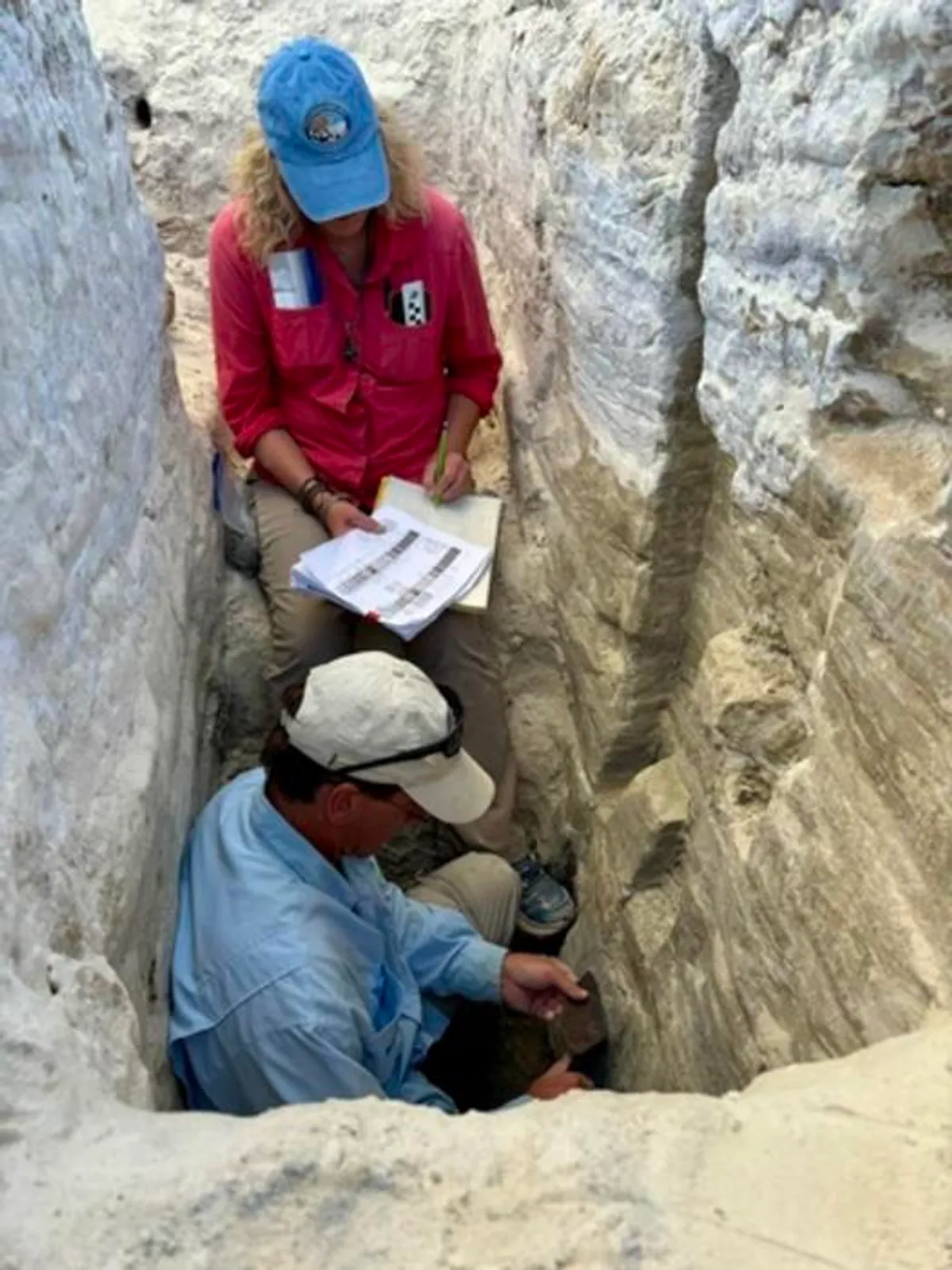
It’s not just their age that makes the White Sand footprints so special, but the fact they are accompanied by this sort of climate data. Plus, so far this all comes from digging a trench 11 meters (36 feet) long, which is only a tiny slice of the whole site.
"Even though these footprints have been buried in the gypsum mud for more than 20,000 years, they look like someone walked out on the playa yesterday," said Tierney. "This is an incredibly rare opportunity to be able to do paleoclimate reconstruction and combine it with archaeology in the same exact place."
Having matched the abrupt warming at White Sands to a similar spike seen from Greenland ice cores, the team has shown it was a global – or at least northern hemisphere-wide – phenomenon. It is hoped this finding will help lead to explanations of what caused the spike.
May you like


"This research continues to remind scientists and the wider public that these resilient ancient human populations are the ancestors of contemporary Indigenous peoples, providing important scientific evidence in support of sovereign Native nations' oral traditions and reinforcing the fact that we have been here since time immemorial," said Dr Ed Jolie, an author of the paper.
Whether the White Sands people survived long enough to contribute to the gene pool of modern-day Native Americans is as yet unknown, and it may be that this early attempt at colonizing the Americas left no lasting impact, aside from footprints on the sand.
The study is published in Science Advances .