George Jefferson Remained Offscreen for Two Years Because the Right Actor Would Not Leave the Stage In 1971, Norman Lear offered Sherman Hemsley the role of George Jefferson on All in the Family. Hemsley said he could not take it. He was performing in Purlie, the Broadway musical that had given him his first major professional break. Before that, Hemsley had worked nights at the post office while studying acting and pursuing stage roles during the day. Walking away from Purlie for a television character who might disappear after a few episodes would have meant abandoning the commitment that had finally moved him out of the mailroom. Lear did something unusual. He waited. Louise Jefferson and her son Lionel moved next door to Archie and Edith Bunker, but George remained largely beyond the camera. The scripts mentioned him, allowing viewers to form an impression of Louise’s stubborn, ambitious husband without seeing his face. When the show needed another Jefferson man to confront Archie, Lear’s team created George’s brother Henry, played by Mel Stewart. The substitute character solved the immediate problem without giving away the role. Nearly two years later, Hemsley became available. He entered All in the Family as a dry cleaner determined to answer Archie Bunker’s bigotry with equal force. The small, private actor who favored casual clothes offscreen constructed a man who seemed to occupy more space than anyone else in the room. George’s physical life developed through rehearsal. Hemsley drew on men he had known in South Philadelphia—the posture of someone who needed the sidewalk to understand that he mattered. During one apartment-building sequence, the cast repeated an entrance seven or eight times. On a later take, Hemsley began clowning, adding an exaggerated strut. That was the take the producers kept. George and Louise moved from Queens to Manhattan in 1975, carrying their marriage, arguments and dry-cleaning fortune into The Jeffersons. The series lasted eleven seasons, making Hemsley one of the most visible Black television stars in America and presenting a prosperous Black family at a scale network audiences had rarely seen. The role looked inevitable in retrospect. It was not. George Jefferson reached television because one actor honored the stage work already in his hands—and one producer believed the character could survive long enough without a face to wait for him.
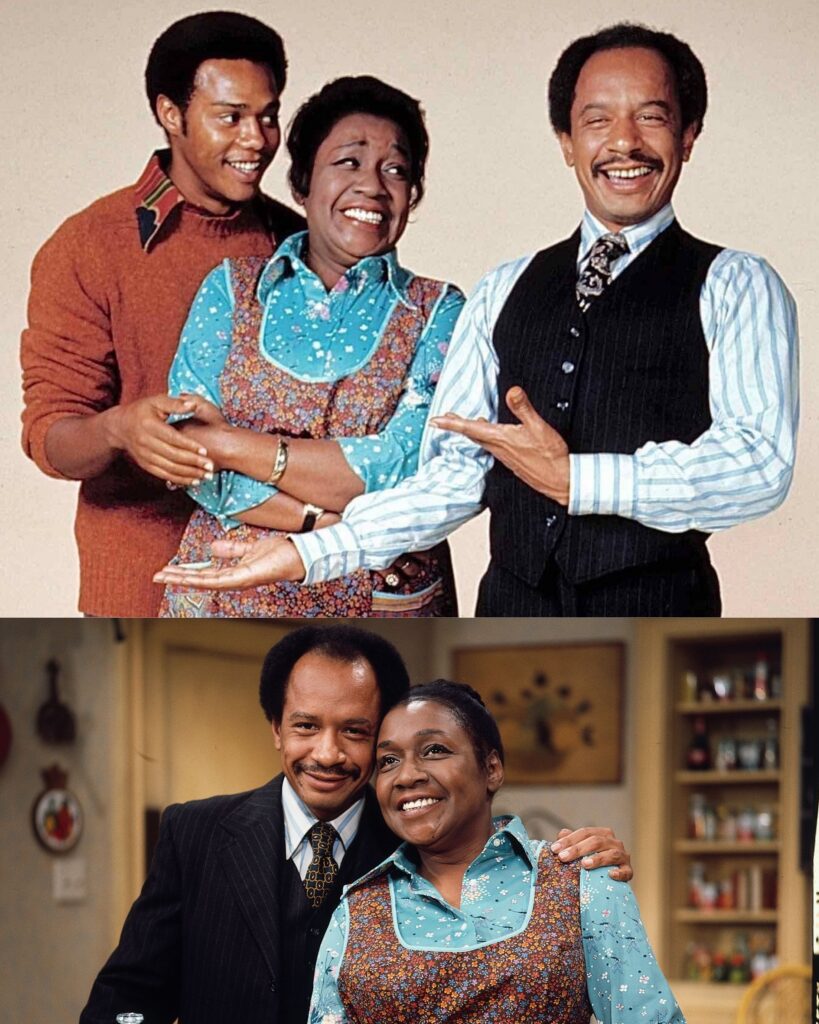
THE TWO YEARS TELEVISION WAITED FOR GEORGE JEFFERSON A Post Office Worker After Midnight Sherman Hemsley did not arrive in New York with the security to wait for acting work. Raised in South Philadelphia, he served in the Air Force and later studied at the Philadelphia Academy of Dramatic Arts. After moving to New York, he worked a graveyard shift at the post office. The job allowed him to earn a living at night while rehearsing and auditioning during the day. He joined the Negro Ensemble Company and developed through theater rather than television. His breakthrough came when he was cast as Gitlow in the Broadway musical Purlie . The role mattered because it confirmed years of work performed around another job. Hemsley was no longer merely preparing to become an actor. He was standing on Broadway as one. Norman Lear saw him there. Lear was searching New York stages for performers as he built a form of television comedy more confrontational than the domestic sitcoms surrounding it. He recognized in Hemsley the tightly wound energy he wanted for a character audiences had not yet met. A Husband Without a Face All in the Family introduced the Jefferson household gradually. Lionel Jefferson, played by Mike Evans, appeared first. Louise, played by Isabel Sanford, followed. They lived near the Bunkers in Queens, placing a Black family directly beside Archie Bunker’s resentments and prejudices. George was discussed but unseen. His absence became part of his early identity. Viewers heard about the husband building a dry-cleaning business and understood that his temper could meet Archie’s without yielding. Louise and Lionel supplied enough detail for the audience to imagine the pressure waiting beyond the door. Lear intended Hemsley to fill that space. Hemsley, however, was committed to Purlie and reluctant to abandon it. A…
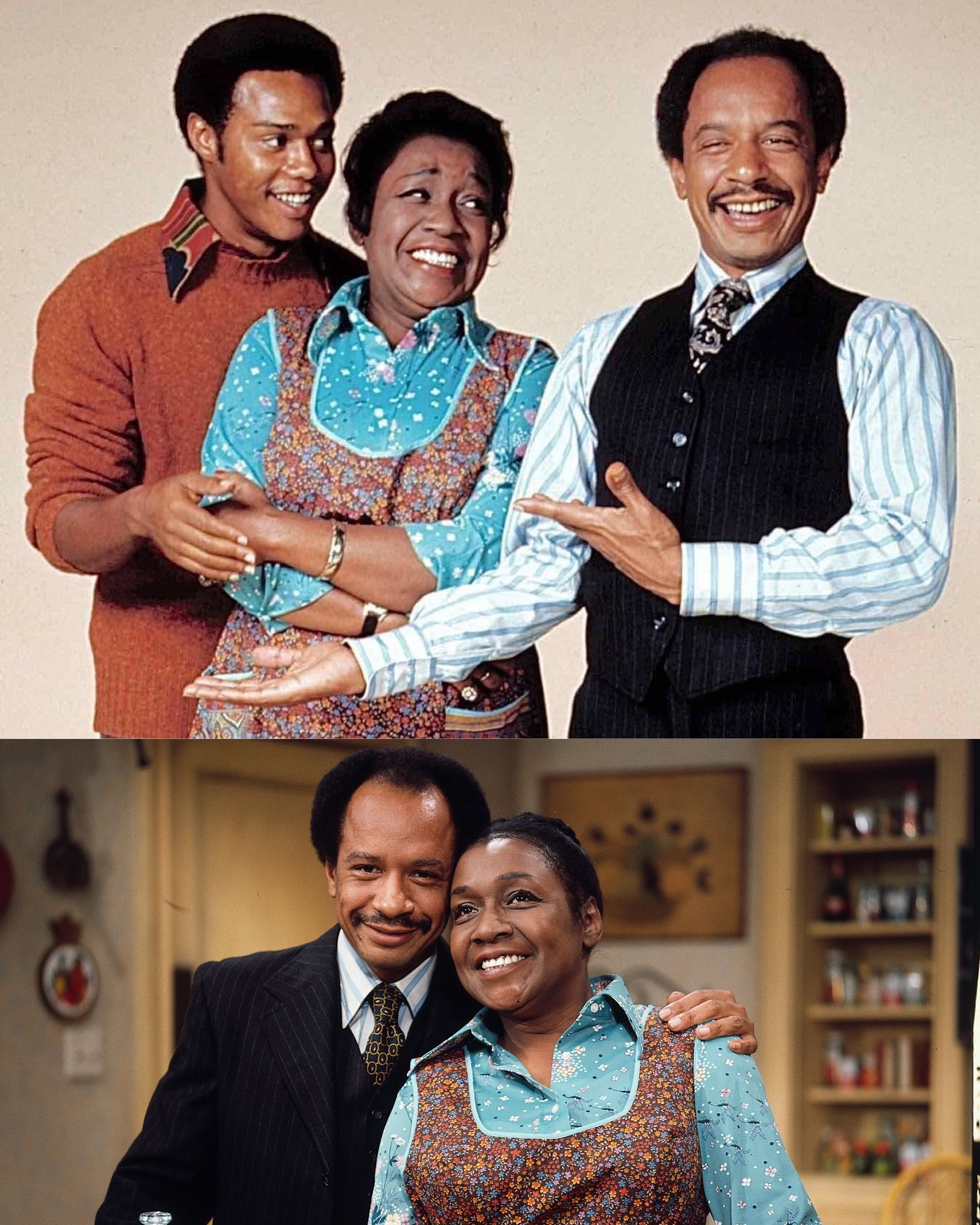
THE TWO YEARS TELEVISION WAITED FOR GEORGE JEFFERSON
A Post Office Worker After Midnight
Sherman Hemsley did not arrive in New York with the security to wait for acting work.
Raised in South Philadelphia, he served in the Air Force and later studied at the Philadelphia Academy of Dramatic Arts. After moving to New York, he worked a graveyard shift at the post office. The job allowed him to earn a living at night while rehearsing and auditioning during the day.
He joined the Negro Ensemble Company and developed through theater rather than television. His breakthrough came when he was cast as Gitlow in the Broadway musical Purlie .
The role mattered because it confirmed years of work performed around another job. Hemsley was no longer merely preparing to become an actor. He was standing on Broadway as one.
Norman Lear saw him there.
Lear was searching New York stages for performers as he built a form of television comedy more confrontational than the domestic sitcoms surrounding it. He recognized in Hemsley the tightly wound energy he wanted for a character audiences had not yet met.
A Husband Without a Face
All in the Family introduced the Jefferson household gradually.
Lionel Jefferson, played by Mike Evans, appeared first. Louise, played by Isabel Sanford, followed. They lived near the Bunkers in Queens, placing a Black family directly beside Archie Bunker’s resentments and prejudices.
George was discussed but unseen.
His absence became part of his early identity. Viewers heard about the husband building a dry-cleaning business and understood that his temper could meet Archie’s without yielding. Louise and Lionel supplied enough detail for the audience to imagine the pressure waiting beyond the door.
Lear intended Hemsley to fill that space. Hemsley, however, was committed to Purlie and reluctant to abandon it.
A conventional production would have cast someone else and continued. Television schedules rarely preserve a part for an actor with no established screen following.
Lear allowed George to remain outside the frame.
Henry Jefferson Enters Instead
The writers eventually required another adult Jefferson man who could appear opposite Archie.
Their solution was not to replace George. They invented his brother.
Mel Stewart entered as Henry Jefferson, carrying scenes that might otherwise have belonged to George. Henry argued with Archie and gave the Bunkers another close encounter with a Black neighbor unwilling to absorb insult quietly.
The character functioned as a bridge. He allowed All in the Family to develop the Jefferson family while Lear continued protecting the role he had imagined for Hemsley.
Once Hemsley joined the show, Henry became unnecessary and disappeared from the expanding Jefferson story.
The arrangement reveals how strongly casting can alter fictional family history. George acquired a brother because the actor chosen to play him was still fulfilling a theatrical commitment on the other side of the country.
The Entrance Lear Had Been Waiting For
Hemsley finally joined All in the Family in 1973.
Lear had seen qualities in his stage performance that matched the offscreen George already described in scripts: speed, pride, comic sharpness and the energy of someone permanently prepared to defend his place.
Hemsley was much quieter than the character. Away from the set, colleagues remembered a reserved man who dressed casually and did not carry George’s combative manner into ordinary conversation.
That distance gave him control. He was not simply being himself loudly. He was constructing George through rhythm—tightening the voice, placing the pauses and allowing the body to announce a challenge before the dialogue arrived.
His first meeting with Isabel Sanford began the partnership that would define both performers. Sanford was more than twenty years older than Hemsley, yet their contrasting rhythms created a believable long marriage. George surged. Louise absorbed, redirected and occasionally stopped him with a look.
The role Lear had held open became inseparable from the woman who had been playing his wife before he arrived.
Finding the Walk
George Jefferson’s strut was not delivered in a character description.
Hemsley drew from the physical language of South Philadelphia. He remembered men walking as if posture itself could establish importance. George’s body became part of his argument with the world: chest forward, shoulders alive, steps compressed with urgency.
The famous walk emerged during repeated filming of an entrance. After seven or eight takes, the actors began loosening the scene and playing around. Hemsley exaggerated George’s movement.
The producers used it.
What began as relief from repetition became a signature audiences recognized before George spoke. It expressed several things at once: vanity, combativeness, joy and the determination of a man who had acquired money but still expected every room to question whether he belonged there.
The walk was funny because Hemsley made it precise. It endured because it carried the character’s history.
From Archie’s Neighbor to the East Side
George’s dry-cleaning business prospered. In 1975, the Jeffersons left Queens for a luxury apartment on Manhattan’s Upper East Side.
The move created The Jeffersons , a series built around a Black family whose central conflict was not poverty. George owned a successful chain of businesses. The family employed a maid. Their neighbors included an interracial couple, Tom and Helen Willis, whose daughter married Lionel.
George did not become socially enlightened simply because he became wealthy. The show allowed him to be prejudiced, insecure, generous, selfish and funny. His money provided access without erasing the humiliations that had shaped him.
This complexity made the casting essential. A broader performance could have reduced George to noise. Hemsley’s stage training allowed him to find the fear and calculation beneath the bluster, even when the script moved quickly toward a joke.
The series continued for eleven seasons, from 1975 through 1985.
The Actor Beneath the Character
Hemsley’s identification with George became both achievement and limitation.
He embodied the part so completely that viewers often assumed the actor shared the character’s personality. In interviews, Hemsley laughed at the difference. His interests ranged well beyond the public image attached to him, including experimental and progressive music.
After The Jeffersons , he created another enduring sitcom character in Amen , playing Deacon Ernest Frye. The role used some of the same comic velocity but operated through a different rhythm and institutional world.
Still, George followed him. Guest appearances invited the walk, the voice or the expectation that Sherman Hemsley would enter already behaving like the man from the East Side.
The actor who had once been unavailable for television became difficult for television to imagine as anyone else.
The Role That Changed What Success Looked Like
The Jeffersons mattered beyond its longevity.
American television had shown Black families before, but rarely one living in an expensive apartment because the father’s business had succeeded. George and Louise did not arrive through charity or the approval of white characters. They moved because George had expanded his dry-cleaning stores and could afford the address.
The series examined what happened after financial advancement. Money did not settle questions of race, belonging or respect. George expected achievement to protect him from humiliation and became furious whenever it failed.
For some viewers, the apartment itself widened the imaginable world. Actor Damon Evans later said the series allowed children who had known only poverty on television to see that a Black family could move beyond it.
That meaning depended on George being larger than a respectable symbol. Hemsley gave him appetites, flaws and enough pride to make success feel contested rather than bestowed.
What Sherman Hemsley Brought Through the Door
Norman Lear’s decision to wait is often told as proof that Sherman Hemsley was perfect for George Jefferson.
May you like


The more revealing part lies in what happened on both sides of the delay.
Hemsley honored the stage production that had finally rewarded his early years of nighttime postal work and daytime acting. Lear allowed a valuable television role to remain incomplete rather than ask the actor to treat one commitment as disposable because another medium had called.
When Hemsley eventually entered, he brought those theater years with him: control of timing, physical precision and an understanding that a comic character could fill a room without becoming hollow.
George Jefferson’s success was later measured in ratings, eleven seasons and cultural recognition. Hemsley’s first important decision had been made before any of that existed.
He did not run toward television the moment it opened a door. He finished the work he was already doing—and arrived carrying the discipline that made the next role last.
Video