5 minutes ago – “Australian sensational case”: Gus Lamont (4), missing in South Australia, has been found – Police deliver heartbreaking news to family – “Goodbye, little girl” – Soaps Spoilers – Trends

The Anatomy of an Unthinkable Disappearance In the quiet, tightly knit community of Pine Ridge, Oregon, time seemed to fracture on a crisp autumn morning nearly twelve months ago. Four-year-old August “Gus” Lamont vanished from his family’s fenced backyard without a single trace, leaving behind a community in paralyzing grief and a national media landscape desperate for answers. For 364 days, the investigation plateaued into a heartbreaking cold case, dominated by exhaustive ground searches, sonar scans of nearby rivers, and agonizing appeals from grieving parents who refused to let their son become a forgotten statistic. However, the silence that has hung heavy over the Lamont family for the past year was shattered this morning. In a sudden and unexpected press conference held at regional police headquarters, lead investigators released a trove of stunning new information. To the astonishment of seasoned detectives and hopeful well-wishers alike, official sources confirmed that after nearly a year of dead ends, new, credible forensic and digital evidence has surfaced indicating that little August “Gus” Lamont is still alive. This breaking development has instantly reignited a nationwide search, shifting the narrative from a recovery mission to an active, high-stakes rescue operation. As new details emerge, the entire nation holds its collective breath, desperate to understand how a cold case has suddenly transformed into a beacon of defiant hope. A Breakthrough Born from Digital Forensics For months, critics of the initial investigation questioned whether every digital avenue had been thoroughly exhausted. When Gus first went missing on a Tuesday afternoon, local authorities quickly scoured the immediate perimeter. Search and rescue teams deployed tracking dogs, thermal-imaging drones, and hundreds of civilian volunteers who combed through thousands of acres of dense pine forest. Yet, despite covering an unprecedented radius, not a single piece of clothing or personal item belonging…
The Anatomy of an Unthinkable Disappearance
In the quiet, tightly knit community of Pine Ridge, Oregon, time seemed to fracture on a crisp autumn morning nearly twelve months ago. Four-year-old August “Gus” Lamont vanished from his
family’s fenced backyard without a single trace, leaving behind a community in paralyzing grief and a national media landscape desperate for answers. For 364 days, the investigation plateaued into a
heartbreaking cold case, dominated by exhaustive ground searches, sonar scans of nearby rivers, and agonizing appeals from grieving parents who refused to let their son become a forgotten statistic.
However, the silence that has hung heavy over the Lamont family for the past year was shattered this morning. In a sudden and unexpected press conference held at regional police headquarters, lead investigators released a trove of stunning new information.
To the astonishment of seasoned detectives and hopeful well-wishers alike, official sources confirmed that after nearly a year of dead ends, new, credible forensic and digital evidence has surfaced indicating that little August “Gus” Lamont is still alive.
This breaking development has instantly reignited a nationwide search, shifting the narrative from a recovery mission to an active, high-stakes rescue operation. As new details emerge, the entire nation holds its collective breath, desperate to understand how a cold case has suddenly transformed into a beacon of defiant hope.
A Breakthrough Born from Digital Forensics
For months, critics of the initial investigation questioned whether every digital avenue had been thoroughly exhausted. When Gus first went missing on a Tuesday afternoon, local authorities quickly scoured the immediate perimeter.
Search and rescue teams deployed tracking dogs, thermal-imaging drones, and hundreds of civilian volunteers who combed through thousands of acres of dense pine forest. Yet, despite covering an unprecedented radius, not a single piece of clothing or personal item belonging to the four-year-old was ever recovered.
The lack of physical clues drove investigators to re-examine the digital and financial footprints surrounding the community. According to the latest police briefing, the breakthrough came not from the forest
floor, but from an encrypted metadata trail discovered during a routine review of dormant cloud storage accounts tied to an unidentified IP address originating from a neighboring county.
Cyber-crime units, working in tandem with federal agencies, managed to decrypt a series of compressed image files uploaded late last week. The images—though grainy and captured from a distance—depict a young
child matching Gus’s distinct physical markers: the specific shape of his left earlobe, a faint scar just above his right eyebrow from a childhood tumble, and a pair of customized velcro
shoes his grandmother had sewn for him shortly before his disappearance. More importantly, background timestamps and embedded location data within the files suggest the images were taken within the last fortnight.
“We are dealing with a meticulously planned concealment,” stated Chief Inspector Marcus Vance during the emotional press briefing. “For months, we operated under the assumption of a tragic wandering or an opportunistic local abduction.
The digital footprint we have uncovered changes the scope entirely. We now have verified, actionable intelligence that suggests Gus was taken, is being cared for, and, most crucially, is alive.”
The Emotional Toll and the Parents’ Plea
For Sarah and David Lamont, the past year has been an exercise in unimaginable psychological endurance. Daily life transformed into a grueling routine of looking out windows, checking security camera
feeds, and reliving the terrifying seconds of that fateful Tuesday when their youngest child slipped out of view while chasing a butterfly.
When informed of the police department’s latest findings, the Lamont family released a statement through their legal counsel, balancing profound relief with an urgent plea for public restraint and cooperation.
“For 365 days, our hearts have lived in a state of suspended animation,” the statement read. “Every morning brought the crushing weight of absence; every night brought prayers that our little boy was warm, safe, and unafraid.
Today’s news from the police department is the first genuine breath of air we have taken in a year. We know our son is out there. We know he is alive.
We beg whoever has him, or anyone who knows where he is being kept, to look into your heart and bring Gus home to us. No questions asked. Just return our baby.”
Psychologists specializing in parental trauma note that while this new evidence provides an invaluable psychological lift, it also introduces a harrowing new phase of anxiety. The hope that a child
is alive intensifies the yearning, making every passing hour feel like an eternity as law enforcement works against the clock to track down digital signals to a physical address.
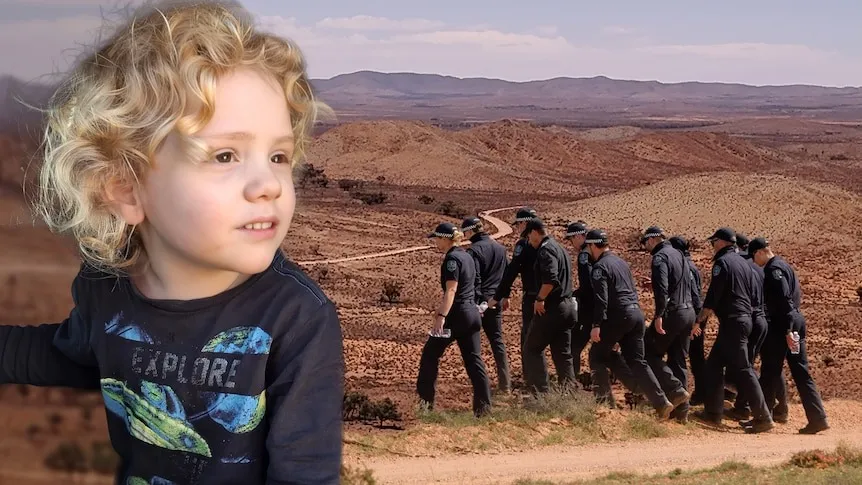
The Investigation Enters a Critical Phase
Following today’s announcement, the dynamics of the Pine Ridge Police Department have shifted overnight. Task forces that had been scaled down to skeleton crews over the winter months have been immediately reinforced with federal specialists, linguistic analysts, and undercover operatives.
Roadblocks have been established along major interstate corridors leading away from the Pacific Northwest, and border control agencies have been placed on high alert. Investigators are executing a series of emergency search warrants across three separate counties based on the triangulation of the digital data received earlier this week.
However, authorities are walking a delicate tightrope. Because the investigation involves a young child and potential conspirators who may be monitoring media coverage, police have withheld specific details regarding the exact nature of the digital trail and the geographical focus of current raids.
“We understand the public’s insatiable hunger for details,” Chief Vance cautioned reporters at the conclusion of the briefing. “Every citizen wants to grab a flashlight and join the hunt. But
at this delicate juncture, operational security is paramount. We cannot tip our hand to individuals who may be harboring the child. What we ask of the public right now is
vigilance, dissemination of verified information, and a willingness to call our dedicated tip line if anything looks or feels out of place.”
A Nation Watches and Waits
As dusk settles over Pine Ridge tonight, the atmosphere is vastly different from the despair that characterized the anniversary of Gus’s disappearance just days ago. Candles still flicker on the Lamont family’s front porch, but tonight they burn not in mourning, but as a beacon of fierce, unyielding hope.
The revelation that August “Gus” Lamont survived the cold, isolation, and uncertainty of the past year has galvanized a nation. Billboards across the country are updating their displays with enhanced
May you like


age-progression photos and the latest police advisories. Social media networks are flooded with the hashtag #BringGusHome, transforming digital spaces into a collective watchtower.
The road ahead remains fraught with danger and uncertainty. Law enforcement faces a race against time to intercept whoever is holding the four-year-old before they realize the net is closing in.
Yet, for the first time in nearly twelve months, the narrative is no longer about looking backward into the dark abyss of a cold case. It is about looking forward—toward
a dawn where a little boy named Gus might finally walk back through his front door, into the arms of parents who never stopped believing