Oysters Are the Unsung Heroes of Our Coastlines—and What Happens After You Eat Them Matters More Than You Think
Glen Richard/Getty Images Wild oyster populations have declined dramatically across the globe, with some reduced to just a tiny fraction of their historic levels. In the U.S., for example, the oyster population in the Chesapeake Bay is at 1 to 2 percent of historic levels, according to NOAA Fisheries . The numbers are certainly staggering, but what do they mean for coastal ecosystems and the wildlife that depend on oyster reefs? And what’s being done to reverse the trend? Oyster reefs play an outsized role in protecting shorelines, filtering water, and providing habitats for marine life. Thankfully, several organizations, particularly along the East Coast, are working to restore these vital habitats and bring oyster populations back from the brink. That means you can enjoy the tasty bivalves and help grow sustainable populations by recycling oysters through programs like the South Carolina Oyster Recycling and Enhancement Program, which we’ve partnered with for the Food & Wine Classic in Charleston this November. Tickets for the Travel + Leisure Pearls of the Coast: A Lowcountry Oyster Roast on Nov. 13 are still available to purchase online. Why Oyster Reefs Are Disappearing Ryan Tishken/Getty Images Several factors have contributed to the decline over the last several hundred years, including pollution, climate change, disease, and overharvesting. As coastal areas become more developed, impervious surfaces—like roadways, parking lots, rooftops, and sidewalks—have increased. “These surfaces increase stormwater runoff and the amount of non-point source pollution entering nearby waterways,” explains Aidan Richter, a wildlife biologist with the South Carolina Department of Natural Resources’ South Carolina Oyster Recycling and Enhancement Program (SCORE). “Non-point source pollutants can include trash, gasoline, excess fertilizers, bacteria from pet waste, toxic chemicals, and excess sediment, all of which can impact water quality and the health of oysters.” Harvesting also removes the shells oysters need…
Glen Richard/Getty Images
Wild oyster populations have declined dramatically across the globe, with some reduced to just a tiny fraction of their historic levels. In the U.S., for example, the oyster population in the Chesapeake Bay is at 1 to 2 percent of historic levels, according to NOAA Fisheries . The numbers are certainly staggering, but what do they mean for coastal ecosystems and the wildlife that depend on oyster reefs? And what’s being done to reverse the trend?
Oyster reefs play an outsized role in protecting shorelines, filtering water, and providing habitats for marine life. Thankfully, several organizations, particularly along the East Coast, are working to restore these vital habitats and bring oyster populations back from the brink. That means you can enjoy the tasty bivalves and help grow sustainable populations by recycling oysters through programs like the South Carolina Oyster Recycling and Enhancement Program, which we’ve partnered with for the Food & Wine Classic in Charleston this November. Tickets for the Travel + Leisure Pearls of the Coast: A Lowcountry Oyster Roast on Nov. 13 are still available to purchase online.
Why Oyster Reefs Are Disappearing
Ryan Tishken/Getty Images
Several factors have contributed to the decline over the last several hundred years, including pollution, climate change, disease, and overharvesting. As coastal areas become more developed, impervious surfaces—like roadways, parking lots, rooftops, and sidewalks—have increased. “These surfaces increase stormwater runoff and the amount of non-point source pollution entering nearby waterways,” explains Aidan Richter, a wildlife biologist with the South Carolina Department of Natural Resources’ South Carolina Oyster Recycling and Enhancement Program (SCORE). “Non-point source pollutants can include trash, gasoline, excess fertilizers, bacteria from pet waste, toxic chemicals, and excess sediment, all of which can impact water quality and the health of oysters.”
Harvesting also removes the shells oysters need to reproduce. “In nature, when an oyster dies or is consumed by a predator, the shell remains in the estuary ready to support new recruits. When we are consumers of this delicacy and harvest the oyster, we are not leaving behind the shell and are removing the suitable settlement surface,” Richter says.
Climate change adds another challenge. “As sea levels rise, oyster reefs and the salt marshes they are associated with have to keep up with changing water levels,” says Holly Sommers, a wildlife biologist with the SCORE program. Coastal development can also prevent marshes from migrating inland as tides rise, resulting in habitat loss.
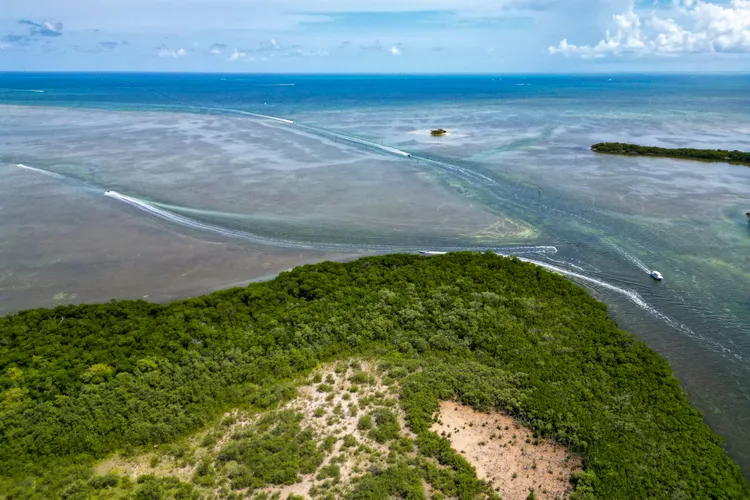
Finally, boat wakes contribute to shoreline erosion. “They can be especially harmful in shallow, narrow waterways where the wake energy has less distance to dissipate before reaching the shoreline,” says Sommers, noting that the increased boat traffic adds more stress to oyster reefs and salt marshes.
What Happens When Oysters—and Their Reefs—Disappear?
Owen Humphreys – PA Images/Getty Images
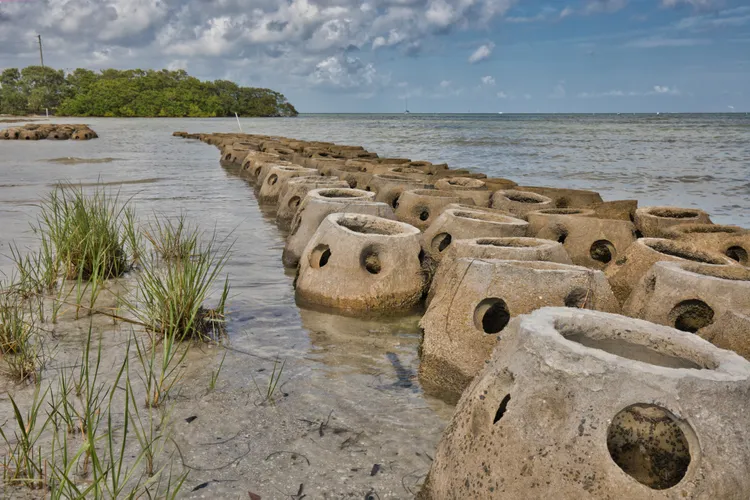
Like elephants and beavers, oysters are considered “ecosystem engineers” and a keystone species, with their reefs serving as habitats for blue crab, shrimp, flounder, anchovies, and striped bass. Depending on their location, oyster reefs also provide shoreline protection. “During low tide, that reef structure also acts as a natural breakwater, dissipating wave energy, trapping sediment, and helping reduce erosion along our shorelines,” explains Richter. Additionally, oysters are filter feeders; just one adult oyster, he says, can filter up to 2.5 gallons of water an hour. Across a thriving reef, that capacity adds up, improving water quality by removing excess nutrients and sediment.
“When an oyster reef disappears, it’s not just the oysters that are no longer there—it also removes the habitat, shoreline protection, and ecological functions that help keep our estuaries healthy and resilient,” says Richter. Without established reefs to stabilize sediment and protect salt marshes from erosion, these interconnected coastal habitats become more vulnerable, too.


How Oyster Reef Restoration Projects Are Helping
Despite the substantial decline in wild oyster populations, restoration efforts along the East Coast are helping rebuild these vital habitats. “In the Chesapeake Bay—in what is the world’s largest oyster reef restoration effort—a partnership effort has actively restored roughly 1,900 acres of oyster reef, and work continues,” says John Chu, public affairs director of NOAA Fisheries. “The resulting healthy reefs support the ecosystem by providing habitat and cleaner water—and they also support the economy because larvae they produce can bolster aquaculture efforts and the wild oyster harvest.”
The Importance of Recycling Shells
Glenn/Adobe Stock
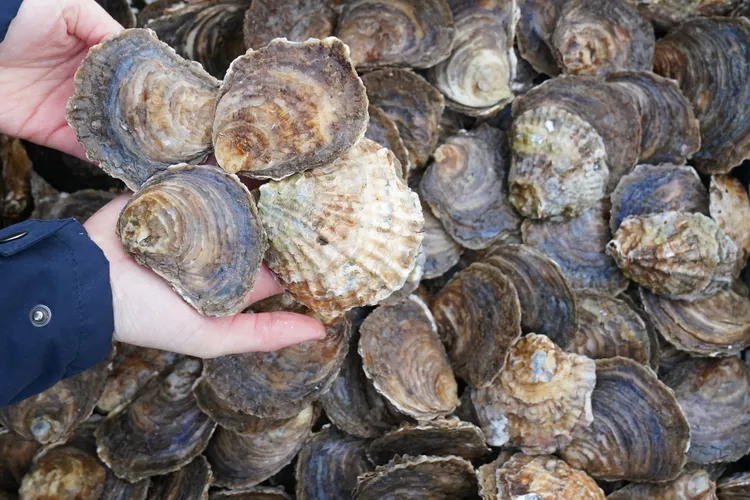
A key component of oyster reef restoration is creating suitable surfaces for young oysters, known as spat, to attach to and grow. And while other materials can serve this purpose, recycled oyster shells are particularly valuable. “Oyster shell is the natural substrate for oyster larvae to land on,” says Richter. “While there are other substances that can mimic this, the best substrate is still oyster shell. Every shell recycled can be used for making new reefs.”
In South Carolina, where an estimated 300,000 bushels of oysters are consumed annually, SCORE and its statewide partners recycle approximately 40,000 bushels of shells each year. The program collects shells from restaurants and oyster roasts, as well as through 37 public drop-off sites. “For anyone eating oysters in Charleston , I encourage you to check out our map of restaurants that recycle with the SCORE program and look for the SCORE partner sticker at participating restaurants,” says Sommers. “Supporting those businesses and thanking them for recycling is a simple way to help keep this effort growing. And if you’re eating somewhere that serves oysters, encourage them to participate if they aren’t!”
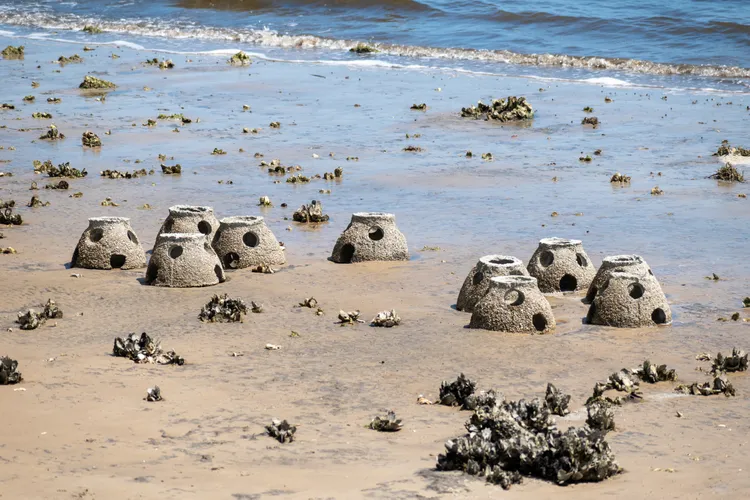
Before the recycled shells can return to the water, they undergo a six-month quarantine to allow organic material to break down and help prevent harmful pathogens from entering waterways. Once cleaned and prepared, the shells can be deployed in restoration sites as loose shells, in bags, or within manufactured wire reefs.
And it doesn’t take long for these efforts to pay off. “Recruited oysters, or spat, can be seen with the naked eye within just two weeks of deployment, and depending on the restoration method used, sediment accretion can also be seen during that short period of time,” says Sommers. “This multifaceted approach, along with stringent replanting guidelines commercial oyster harvesters are held to, allows for this sustainable cycle to begin again.”
May you like


Finding the Right Reef Restoration Method
Oyster reef restoration isn’t as simple as placing shells in the water and waiting for oysters to grow. Site conditions—including wave energy, sediment type, and erosion—help determine which approach is most likely to work in that particular location. “One of the biggest things is that there isn’t one restoration method that works for every shoreline,” explains Richter. SCORE uses a range of techniques, from bagged-shell reefs to manufactured wire reefs and other structures designed to recruit oysters and stabilize South Carolina shorelines.
Community participation also plays an important role. Restaurants, local governments, nonprofits, and volunteers help collect shells and support restoration projects across South Carolina—and the East Coast. “The more ownership we create within the community, the greater the sense of responsibility to recycle shells. More shells means more restoration, and more restoration means more oyster reefs,” says Richter.
And if you’re eating in a restaurant—in South Carolina or elsewhere—keep the efforts of SCORE as well as other oyster reef restoration organizations in mind. “If you consume oysters, there should be a sense of responsibility for what happens to that shell afterward,” Sommers adds. “Recycle it and use the resources and services available to you.”