Should You Use a Suitcase With Two Wheels or Four? Here’s What Flight Attendants and Frequent Fliers Say
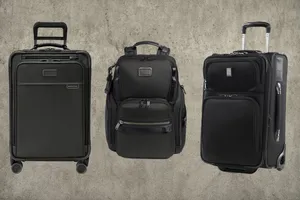
Yiu Yu Hoi/Getty Images As any frequent flier will tell you, toting luggage from destination to destination is hard work—and sometimes results in a sore back, neck, or arms. But beyond the notoriously bulky duffel bags that shift weight to one side of the body, there is now literature discussing how four-wheeled suitcases could be the cause of pesky joint and muscle issues. “I prefer two-wheeled suitcases because they can be pulled directly, with ease, behind you,” an anonymous American Airlines flight attendant shared in an email to Travel + Leisure . The source also stressed that instead of wheels, he has always prioritized the presence of a J-hook: the adjustable strap that allows additional bags to latch onto the front of luggage for balanced, hands-free pulling. “These are beneficial for redistributing weight at the bottom when carrying a tote or laptop case, rather than stacking it on the handle,” he said. “But ultimately, when it comes to stress or injury, I think it’s more about people underestimating how much they pack and how far they’ll be walking, especially [if] they’re used to sitting at desks or in cars all day and remaining inactive.” For Lori Diamos, a physical therapist and founder of Pearls From a PT , the best and most supportive suitcase is a more nuanced, personalized topic. “It really depends on what part of the body you are asking about and what surface you are traveling on,” she explained. “A 2022 review in Cogent Engineering looked at all four main types of wheeled luggage and found that pulled luggage creates too much stress on the pulling arm and tends to produce awkward postures. That said, two-wheeled bags do hold a straighter line on cobblestones and uneven terrain because the wheels are larger and more stable, so surface…
Yiu Yu Hoi/Getty Images
As any frequent flier will tell you, toting luggage from destination to destination is hard work—and sometimes results in a sore back, neck, or arms.
But beyond the notoriously bulky duffel bags that shift weight to one side of the body, there is now literature discussing how four-wheeled suitcases could be the cause of pesky joint and muscle issues.
“I prefer two-wheeled suitcases because they can be pulled directly, with ease, behind you,” an anonymous American Airlines flight attendant shared in an email to Travel + Leisure . The source also stressed that instead of wheels, he has always prioritized the presence of a J-hook: the adjustable strap that allows additional bags to latch onto the front of luggage for balanced, hands-free pulling.
“These are beneficial for redistributing weight at the bottom when carrying a tote or laptop case, rather than stacking it on the handle,” he said. “But ultimately, when it comes to stress or injury, I think it’s more about people underestimating how much they pack and how far they’ll be walking, especially [if] they’re used to sitting at desks or in cars all day and remaining inactive.”
For Lori Diamos, a physical therapist and founder of Pearls From a PT , the best and most supportive suitcase is a more nuanced, personalized topic.
“It really depends on what part of the body you are asking about and what surface you are traveling on,” she explained. “A 2022 review in Cogent Engineering looked at all four main types of wheeled luggage and found that pulled luggage creates too much stress on the pulling arm and tends to produce awkward postures. That said, two-wheeled bags do hold a straighter line on cobblestones and uneven terrain because the wheels are larger and more stable, so surface type genuinely matters here.”
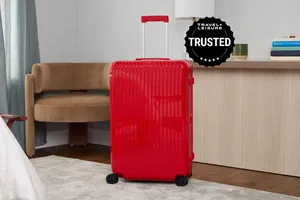
When it comes to pushing versus pulling, the four-wheeled suitcase does seem to reign supreme.
“Pushing is better for your joints, and I actually tested this myself last night with my daughter's four-wheeled spinner on my own neighborhood sidewalks,” said Diamos. “When you push a spinner beside you, your elbow stays bent, your grip stays neutral, and you can switch hands or even use both, which spreads the load rather than stressing one arm over and over. Pulling a two-wheeled bag keeps your arm extended behind you and creates a rotational force through your spine that adds up quickly over a long airport walk.”
“I have hypermobility, so I feel it fast in my elbow and forearm, and I will actually flip my palm position or push my two-wheeled bag in front of me like a lawnmower just to get some relief,” she added. “Pushing keeps your body in front of the load. Pulling puts your body in a tug of war with it.”
At the end of the day, wheel size, handle height, and how you pack are the most significant factors that contribute to comfort and convenience, she noted.
“Research published in Industrial Health found that larger wheels, a handle height matched to your body, and heavier items packed low [to the ground] all reduce joint stress significantly,” she shared. “Honestly, how you use it matters just as much as what you buy. Switching hands, keeping your elbow bent, and not overloading it go a long way. We forget that hauling luggage across a terminal is actually a physical workout most of us never trained for, and the right bag used the right way can make a real difference.”
May you like


No matter your preference, practically any option is superior to a standard duffel bag, yet a properly fitted backpack has proven to be the undisputed champion. Diamos cited a 2013 study that compared six ways of carrying loads; a backpack performed better than all options.
“A good travel backpack is now my personal carry-on and what I recommend to patients because it distributes weight evenly, keeps both hands free, and eliminates the side-tilting a shoulder bag creates,” she said. “We [also] tend to think about the airport terminal as the main event, but getting your luggage there and back home is just as much of a physical stressor. The parking garage, the train platform, the cracked sidewalk from your front door—that is all part of the same trip your body is taking.”