There’s a Surprisingly Simple Way to Remove Microplastics in Your Drinking Water
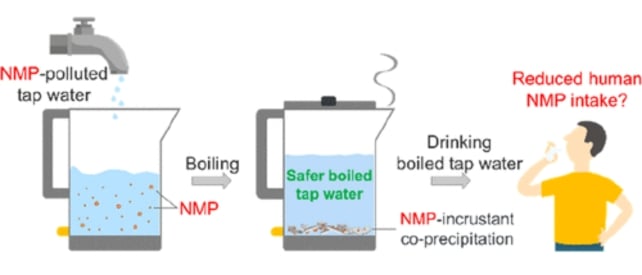
Tiny fragments of plastic are making their way deep inside our bodies in concerning quantities , particularly through our food and drink . But research suggests there is something you can actually do about it. Scientists in China found a simple and effective means of removing them from water – and it starts with something already sitting on your stove. Back in 2024, the team ran tests on both soft water and hard tap water (which is richer in minerals). They added nanoplastics and microplastics to the water before boiling the liquid and then filtering out any precipitates. The tests showed that boiling and then filtering the water can make a significant difference to the plastic contaminants you might otherwise ingest. "Tap water nano/microplastics (NMPs) escaping from centralized water treatment systems are of increasing global concern, because they pose potential health risks to humans via water consumption," the researchers explained in their published paper. Watch the video below for a summary of the findings: In some cases, up to 90 percent of the NMPs were removed by the boiling and filtering process, though the effectiveness varied based on the type of water. Of course, the huge benefit is that most people can do it with what they already have in their kitchen. "This simple boiling water strategy can 'decontaminate' NMPs from household tap water and has the potential for harmlessly alleviating human intake of NMPs through water consumption," biomedical engineer Zimin Yu from Guangzhou Medical University and colleagues explained . A greater concentration of NMPs was removed from samples of hard tap water, which naturally forms a buildup of limescale (or calcium carbonate ) as it is heated. Commonly seen inside kitchen kettles, the chalky substance forms on the plastic's surface as changes in temperature force the calcium carbonate out…
Tiny fragments of plastic are making their way deep inside our bodies in concerning quantities , particularly through our food and drink .
But research suggests there is something you can actually do about it.
Scientists in China found a simple and effective means of removing them from water – and it starts with something already sitting on your stove.
Back in 2024, the team ran tests on both soft water and hard tap water (which is richer in minerals). They added nanoplastics and microplastics to the water before boiling the liquid and then filtering out any precipitates.
The tests showed that boiling and then filtering the water can make a significant difference to the plastic contaminants you might otherwise ingest.
"Tap water nano/microplastics (NMPs) escaping from centralized water treatment systems are of increasing global concern, because they pose potential health risks to humans via water consumption," the researchers explained in their published paper.
Watch the video below for a summary of the findings:
In some cases, up to 90 percent of the NMPs were removed by the boiling and filtering process, though the effectiveness varied based on the type of water.
Of course, the huge benefit is that most people can do it with what they already have in their kitchen.
"This simple boiling water strategy can 'decontaminate' NMPs from household tap water and has the potential for harmlessly alleviating human intake of NMPs through water consumption," biomedical engineer Zimin Yu from Guangzhou Medical University and colleagues explained .
A greater concentration of NMPs was removed from samples of hard tap water, which naturally forms a buildup of limescale (or calcium carbonate ) as it is heated.
Commonly seen inside kitchen kettles, the chalky substance forms on the plastic's surface as changes in temperature force the calcium carbonate out of solution, effectively trapping the plastic fragments in a crust.
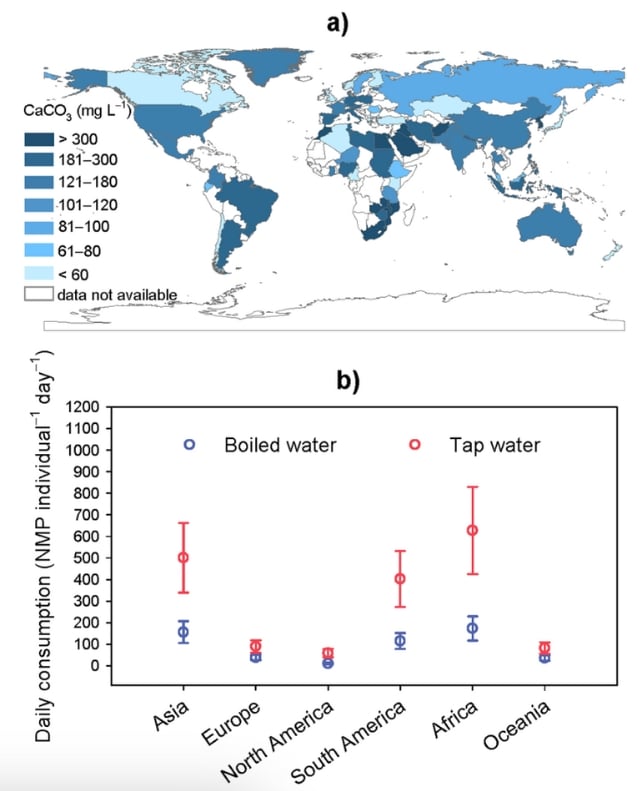
"Our results showed that nanoplastic precipitation efficiency increased with increasing water hardness upon boiling," the team wrote .
"For example, from 34 percent at 80 mg L −1 to 84 percent and 90 percent at 180 and 300 mg L −1 of calcium carbonate, respectively."
Even in soft water, where less calcium carbonate is dissolved, roughly a quarter of the NMPs were snagged from the water.
Any bits of lime-encrusted plastic could then be removed through a simple filter like the stainless steel mesh used to strain tea, the researchers say.
Past studies have measured fragments of polystyrene, polyethylene, polypropylene, and polyethylene terephthalate in potable tap water, which we're consuming daily in varying quantities.
To put the strategy to the ultimate test, the researchers added even more nanoplastic particles, which were effectively reduced in number.
"Drinking boiled water apparently is a viable long-term strategy for reducing global exposure to NMPs," wrote Yu and team.
"Drinking boiled water, however, is often regarded as a local tradition and prevails only in a few regions."
The scientists hope it might become a more widespread practice as plastics continue to take over the world.
Tiny pieces of plastic are an increasingly big problem. Microplastics originate from clothing, kitchen utensils, personal care products, and countless other everyday objects.
Their durability makes them persistent in the environment – including in human bodies .
Not only are many people on Earth already contaminated by microplastics , but we're also still being exposed every day, as there is minimal regulation of these insidious specks.
According to a 2025 literature review from The University of Texas at Arlington, a significant portion of our microplastic exposure may come from drinking water, as wastewater treatment plants are still not effectively removing microplastics.
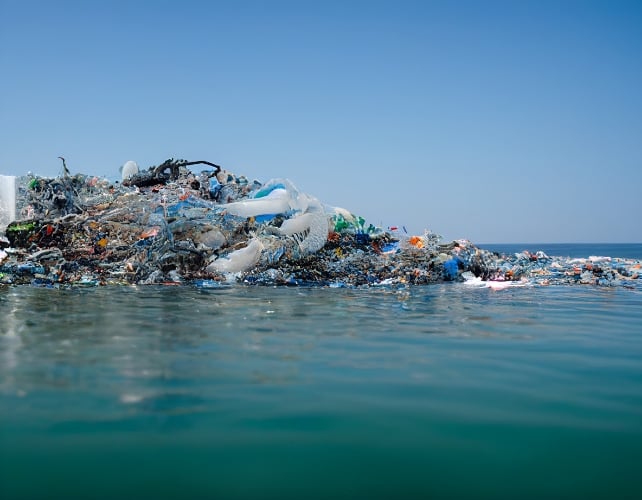
Roughly 9 billion metric tons of plastic have been produced globally since plastic production began, much of which has progressively degraded into ever-smaller fragments without truly breaking down, forming a fine plastic dust that now pervades the planet.
Wastewater treatment plants actually do remove a lot of these small particles, the new review indicates, but not enough.
Related: Glass Bottles Actually Contain More Microplastics, Scientists Find
While it's still not certain exactly how damaging this plastic is to our bodies , it's clearly not the healthiest of snacks.
Plastics have already been linked to changes in the gut microbiome and the body's antibiotic resistance.
May you like


The team behind this study wants to see more research into how boiled water could keep artificial materials out of our bodies – and perhaps counter some of the alarming effects of microplastics that are emerging.
"Our results have ratified a highly feasible strategy to reduce human NMP exposure and established the foundation for further investigations with a much larger number of samples," Yu and colleagues conclude .
The research was published in Environmental Science & Technology Letters .
This article was fact-checked by Jess Cockerill and edited by Fiona MacDonald . While we pride ourselves on our process, we are only human. If you spot a mistake, please let us know .